
I spent weeks researching Maltese puppies for sale in Georgia and nearly got scammed by a listing offering a puppy for under $300. Legitimate AKC Maltese puppies here typically cost several hundred to a few thousand dollars, not less. This guide covers exactly what I learned about pricing, health screening, and regional availability from Atlanta to Gainesville, so you don’t make the same near-mistake I did.

Demand for Maltese puppies has grown steadily across Georgia, driven by the breed’s small size, low-shedding coat, and affectionate personality. In my own search, I noticed the highest listing volume came from Atlanta, but the most careful, well-documented breeders were often smaller operations outside the city.
Daily care needs are moderate but consistent. Maltese puppies bond closely with their owners and can develop separation anxiety if left alone too long. Georgia’s humidity also means coats mat faster in summer, so brushing frequency often needs to increase between May and September.
Quick Self-Check: Is A Maltese Right For Your Georgia Lifestyle?
Answer honestly before you contact any breeder.
Step 1: Do you live in an apartment or home under 1,000 square feet?
Step 2: Can you commit to daily brushing and short indoor play sessions?
Step 3: Do you have small children under age six in the home?
Look for clear eyes, a clean coat, and playful, alert behavior during your first visit. A healthy puppy should move confidently and show interest in people, with no discharge from the eyes, ears, or nose.
Health Checklist To Bring With You:
When I visited a small kennel outside Gainesville, the breeder pulled out a folder with every puppy’s weight log and vet visit dates without me asking twice. That kind of transparency is what separates a serious breeder from a risky one.
AKC-certified breeders follow structured pedigree and ethical breeding standards, which reduces the risk of hidden hereditary health issues. Official registration paperwork lets you trace a puppy’s lineage through documented generations.
Ask the breeder these exact questions before paying anything:
Female Maltese puppies are often described as slightly more independent than males, though individual personality varies more than gender in most cases. Many owners report female Maltese showing strong nurturing instincts around familiar children or smaller pets.
Spaying is typically discussed with a veterinarian between five and six months of age, though ideal timing depends on the individual dog’s growth.
Fact-Check: Some listings claim spaying “before four months” prevents all future health issues. This is an oversimplification. Timing recommendations vary by clinic, breed size, and individual growth rate, and should always come from a licensed veterinarian.
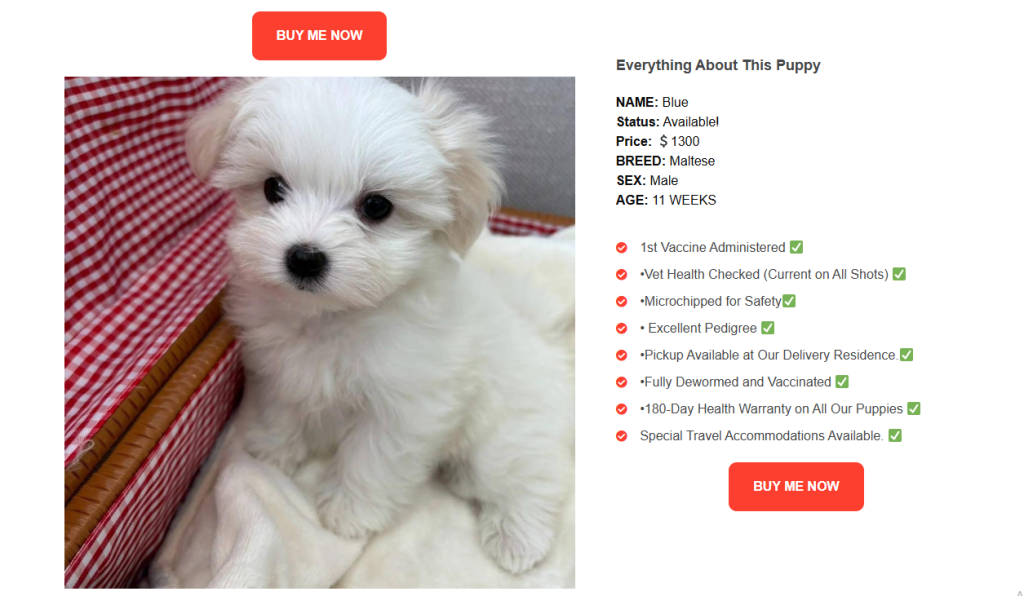
The bright white coat is a major draw for buyers managing pet allergies, since Maltese are often marketed as hypoallergenic due to minimal shedding. Fact-Check: No dog breed is completely allergen-free. “Hypoallergenic” here means reduced allergen exposure, not zero risk, so allergy-prone buyers should still spend time with the breed before committing.
Keeping that coat bright takes consistent care, and Georgia’s humidity makes this more demanding than in drier states:
I noticed a visible difference in staining within about three weeks of sticking to this routine through a Georgia summer, though results vary by individual dog.

Metro Atlanta has the highest concentration of breeders and boutique pet services in the state. Many buyers arrange meet-and-greet sessions in public parks or at the breeder’s secured property before finalizing an adoption.
Always insist on seeing where the puppy was raised, not just meeting in a neutral location, and bring your written question list so nothing gets missed.
In most cases, no. Purebred Maltese puppies with health screening, vaccinations, and AKC documentation rarely cost that little, since breeding and veterinary care carry real expenses.
Reputable Signs vs Red Flags
| Signal | Reputable Sign | Red Flag |
|---|---|---|
| Communication | Willing to video call | Refuses calls or visits |
| Records | Shares vet history openly | Vague or missing records |
| Payment | Accepts payment after visit | Demands untraceable deposit |
| Photos | Original recent litter photos | Reused or stock images |
If a deal feels rushed or the price feels too good, it usually is. Verify any breeder through community reviews and a live video call before sending money.
Breeder availability differs by region. North Georgia’s mountain communities tend to have smaller, family-run kennels, while South Georgia’s agricultural areas often have larger multi-litter operations.
| Region | Breeder Density | Typical Setting | Travel Note |
|---|---|---|---|
| North Georgia | Moderate, family-run | Rural, small kennels | Mountain roads |
| Metro Atlanta | High, mixed | Suburban, boutique | Heavy traffic |
| South Georgia | Lower, larger litters | Agricultural | Longer drives |
If traveling more than a few hours, plan a mid-trip rest stop, bring water, and confirm the puppy has eaten recently before the drive home. Litters are also seasonal in many parts of the state, so ask about waitlists rather than assuming immediate availability.
Yes, Gainesville and the surrounding Hall County area have several small, community-based breeders alongside occasional local adoption events. Hall County’s animal control office can often confirm licensing requirements before you bring a puppy home.
Central Georgia buyers, in Bibb County, have options through regional rescue organizations and established family breeders. Scheduling an in-person kennel visit lets you watch how the puppies interact with their parents, which reveals more about temperament than photos ever will.
These East Metro communities in Newton County host several boutique breeding setups, often smaller in scale than Atlanta proper. Before finalizing an adoption, check local rules on pet licensing and residential limits on the number of dogs per household.

Consensus Check: Veterinary sources and breed clubs generally agree on this point: “teacup” is not an official AKC size classification. It is a marketing label for Maltese puppies significantly smaller than the four to six pound standard, and it comes with real fragility.
These smaller dogs are prone to hypoglycemia, or dangerously low blood sugar, especially in the first few months of life:
These labels are informal and inconsistent between sellers.
| Term | Commonly Cited Weight | AKC Recognition | Health Note |
|---|---|---|---|
| Standard Toy Maltese | 4 to 6 lbs | Recognized | Fewer size risks |
| “Teacup” | Under 4 lbs | Not recognized | Higher hypoglycemia risk |
| “Micro/Tiny Teacup” | Under 3 lbs | Not recognized | Needs close monitoring |
The real question is whether a breeder can explain how they monitor these smaller puppies medically, not just how small the puppy looks in photos.
Yes, in most well-supervised homes. Toy and small Maltese puppies generally do well with children, seniors, and existing pets, provided interactions are supervised given their small frame.
Use a harness instead of a collar to reduce strain on the trachea. A mistake I see often is letting young children carry the puppy unsupervised, since a fall from even a short height can cause serious injury to a dog this small.
Puppies at these price points are uncommon from reputable breeders, but lower-cost alternatives exist through legitimate channels.
Buying vs Adopting Comparison
| Factor | Buying A Puppy | Adopting A Rescue |
|---|---|---|
| Typical Cost | Higher | Lower, adoption fee only |
| Age | Newborn to 12 weeks | Often older, sometimes retired |
| Health History | Breeder-provided records | Rescue-verified in most cases |
| Availability | Waitlists common | Varies by rescue intake |
First-Year Cost Snapshot
| Expense | What It Covers |
|---|---|
| Adoption or purchase fee | The puppy itself |
| First vet exam | Baseline health check |
| Vaccines and microchip | Required preventive care |
| Grooming supplies | Coat and tear stain care |
| Local licensing fee | County pet registration |

You need current vaccination and deworming records, proof of AKC registration if advertised as purebred, and direct contact with the breeder or verified rescue. Always see the puppy’s living environment before paying anything.
Teacup-labeled Maltese puppies often cost more than standard-sized ones due to rarity and higher care demands, though exact pricing varies by breeder.