
Finding Maltese puppies for sale in Maine starts with knowing the real costs, what health clearances to demand, and how to spot a responsible breeder. I have connected Maine buyers with ethical breeders for years, and the gap between a confident purchase and an expensive mistake always comes down to preparation. This guide delivers the breeder checklist, complete cost breakdown, medical clearance requirements, and home preparation plan you need. Every recommendation is grounded in verified standards and veterinary guidance. Here is exactly what to do before you buy.

The Maltese breed has earned a dedicated following in Maine, and from my experience working with buyers across the state, the appeal is consistent. These dogs combine an affectionate, attentive personality with a compact size that works in apartments and houses alike. Their low-shedding white coat suits allergy-conscious households, and their intelligence makes them responsive to patient training.
Families, retirees, and single professionals all find strong matches with well-bred Maltese dogs. The breed thrives on companionship, which makes them natural lap dogs, but that same trait means they do not tolerate being left alone for extended periods. If your household is empty for 8 to 10 hours daily, separation anxiety becomes a real concern.
Maine winters require planning. Maltese dogs lack the dense undercoat that protects northern breeds. During cold months, they need a well-fitted sweater or coat for outdoor time, and freezing temperatures should stay limited to brief potty breaks. Inside heated homes, they adapt beautifully. Maine buyers who prepare for winter care upfront report the smoothest transitions.
Grooming is non-negotiable. That coat requires daily brushing and professional grooming every four to six weeks. Skipping appointments leads to painful matting and skin infections. Budget grooming as a permanent recurring expense from day one.
Here is how Maltese compare to other small breeds popular in Maine:
| Factor | Maltese | Havanese | Bichon Frise | Shih Tzu |
|---|---|---|---|---|
| Adult Weight | 4-7 lbs | 7-13 lbs | 12-18 lbs | 9-16 lbs |
| Grooming Needs | Every 4-6 weeks | Every 4-6 weeks | Every 4-6 weeks | Every 4-6 weeks |
| Cold Tolerance | Low | Moderate | Moderate | Moderate |
| Separation Tolerance | Low | Moderate | Moderate | Moderate |
| Typical Cost | $1,500-$3,500 | $1,000-$2,500 | $1,000-$2,500 | $800-$2,000 |
| Shedding Level | Very Low | Low | Low | Low-Moderate |
Start through established channels. The American Kennel Club breeder directory lets you search by state and breed. The Maltese Club of America maintains a breeder referral programme. Local veterinarians who work with breeders provide the most honest recommendations because they see breeding outcomes directly.
When evaluating breeders, ask specifically about health testing. Responsible breeders test for luxating patellas, portosystemic shunt, progressive retinal atrophy, and cardiac issues. They provide written documentation, not verbal assurance.
Visit the facility in person when possible. If distance prevents this, request a live video tour. You want clean living areas, healthy parent dogs, and puppies that are alert and socialised. Ask about vaccination schedules, deworming protocols, and early socialisation. A responsible breeder will also ask you detailed questions about your home and lifestyle.
| Red Flags to Watch | Green Flags to Confirm |
|---|---|
| No health testing documentation | Written OFA and CERF results available |
| Multiple breeds available simultaneously | Specialises in one or two breeds only |
| Refuses facility visits or video tours | Welcomes in-person visits or live video |
| No contract or health guarantee | Written contract with clear guarantee |
| Puppies available immediately | Waitlist with planned litters |
| Pressures quick deposit | Asks you detailed questions first |
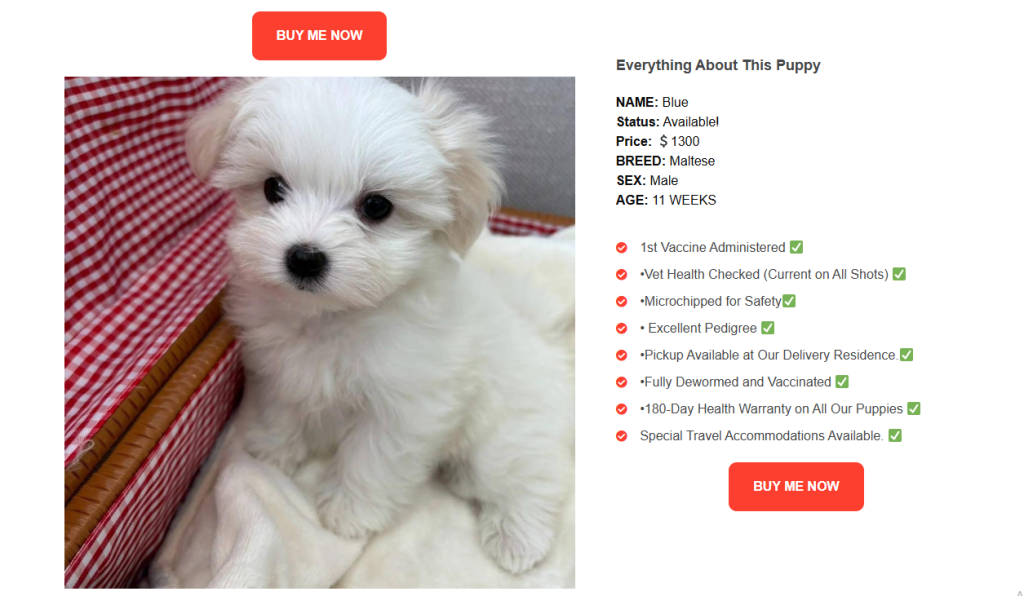
“Teacup” is a marketing description, not an official breed classification recognised by the AKC. Some breeders use it to describe Maltese expected to be notably smaller than standard.
Standard Maltese weigh 4 to 7 pounds at maturity. Exceptionally small puppies may mature at 2 to 3 pounds. These tiny dogs carry real health tradeoffs. Smaller puppies need frequent meals to maintain stable blood sugar. Their bones are more fragile, and they face higher risks of hypoglycemia, dental crowding, and patella problems.
If a breeder leads with “teacup” as a selling point before discussing health testing, proceed with caution. The healthiest small puppies come from programs that prioritise genetic screening over extreme miniaturization.
Purchase price depends on breeder reputation, health testing, pedigree quality, and included veterinary care. The table below shows general market ranges.
| Source | Price Range | Usually Included |
|---|---|---|
| Rescue Organization | $100-$500 | Spay/neuter, vaccinations, microchip |
| Pet-Quality Breeder | $1,500-$3,500 | First vaccines, deworming, health guarantee |
| Champion Bloodline | $4,000-$7,000+ | Extensive health testing, superior pedigree |
| Buyer Cancellation | Approximately $2,000 | Full health testing, older puppy age |
Use this budget worksheet to calculate your total first-year investment:
| Expense Category | Low Estimate | High Estimate |
|---|---|---|
| Purchase Price | $1,500 | $7,000 |
| Startup Supplies | $250 | $600 |
| First Vet Visits | $100 | $300 |
| Total First-Year Cost | $1,850 | $7,900 |
Contact our network of vetted Maine breeders to browse available litters and reserve your ideal companion.
Pet-quality AKC Maltese from established Maine breeders most commonly fall between $1,500 and $3,500. This reflects the breeder’s investment in health testing, quality nutrition, veterinary monitoring, and socialisation programs.
Champion bloodlines run $4,000 to $7,000 or more, accounting for genetic screening, specialised reproductive care, and years of selective breeding. Occasionally a healthy puppy appears around $2,000 due to minor cosmetic variations or buyer cancellations. These represent strong value when health testing documentation is solid.

Pedigree quality drives pricing because documented health, longevity, and temperament command premiums. Breeder experience matters because established programs invest significantly more in their dogs.
Comprehensive genetic testing is not inexpensive. Each evaluation (OFA patella, CERF eye exam, liver shunt screening, cardiac check) carries separate veterinary costs. Prenatal monitoring for the mother adds further expense. Maltese also produce naturally small litters of two to four puppies, meaning each puppy represents a larger share of the breeder’s total investment per breeding cycle.
Budget startup supplies in your first month and plan for recurring annual expenses.
Startup (first month): Crate and bedding ($50-$150), bowls ($15-$40), premium puppy food ($30-$60), leash and harness ($25-$60), grooming tools ($30-$70), training pads ($20-$40), chew toys ($15-$30), initial vet exam ($50-$100). Expect $250 to $600 total.
Recurring annual costs: Premium dog food ($400-$800), professional grooming ($600-$1,200), annual vet care ($200-$500), dental cleanings ($200-$500), pet insurance ($300-$600), supplies ($100-$300). Annual recurring costs generally reach $2,000 to $4,000.
Maine buyers should note that winter outdoor clothing traps moisture against the coat, requiring more frequent professional grooming during cold months. This seasonal cost increase catches many first-time owners off guard.
| Cost Type | DIY Approach | Professional Service |
|---|---|---|
| Brushing | Free (daily, 10-15 min) | N/A |
| Bathing | $10-$20/month supplies | $30-$50/session |
| Full Grooming | $200-$400 tools upfront | $50-$80 every 4-6 weeks |
| Nail Trimming | $15-$25 tools | $15-$25/session |
| Annual Total | $300-$500 | $600-$1,200 |
Adoption fees typically run $100 to $500, and most rescue dogs come spayed or neutered, vaccinated, and microchipped. The lower upfront cost and the chance to provide a permanent home for a dog in need make adoption compelling.
Maltese puppies appear through rescue far less frequently than adult dogs. Monitor platforms like Petfinder and Adopt-a-Pet regularly. Adult rescue dogs often prove equally rewarding, and their established personalities simplify temperament matching.
Complete veterinary records must accompany every puppy before the purchase is finalised. Never proceed on verbal promises alone.
Request written health guarantees outlining the breeder’s obligations if health issues emerge. Review vaccination schedules confirming age-appropriate immunisations. Check deworming records verifying treatments given on schedule. Ask for veterinary examination reports including the clinic name, examining veterinarian, date, and findings.
If a breeder cannot or will not provide this documentation, treat it as a disqualifying red flag.
| Health Test | What It Detects | When to Request |
|---|---|---|
| OFA Patella Evaluation | Knee cap displacement | Before deposit |
| CERF/CAER Eye Exam | Inherited eye conditions | Before deposit |
| Bile Acid Test | Liver shunt (PSS) | Before deposit |
| Cardiac Evaluation | Heart murmurs or defects | Before deposit |
| DNA Panel | Breed-specific genetic conditions | Before deposit |
Both parent dogs should receive health evaluations before breeding. This is the single most important indicator of a responsible breeding program.
Genetic screening reduces inherited conditions. For Maltese, the most critical evaluations include OFA patella certification, CERF or CAER eye examinations, liver shunt screening via bile acid testing, and cardiac evaluation. Reviewing parental documentation provides meaningful confidence in your puppy’s long-term health outlook.
Review each document carefully. Vaccination records should list dates, vaccine types, and the administering clinic. Deworming records should show treatment dates and products used. All paperwork must include the clinic name, address, and contact information.
Schedule an independent veterinary examination within the first week after bringing your puppy home. This establishes a health baseline with your own veterinarian and catches issues not apparent during the breeder’s initial assessment.

Most healthy adult Maltese weigh 4 to 7 pounds. Genetics, nutrition, and breeding practices all influence final size. Observing both parent dogs provides the best preview of your puppy’s mature weight.
Be cautious about breeders who guarantee a specific tiny adult weight. Size claims should be grounded in veterinary science, not marketing language. Responsible breeders provide realistic projections based on parent measurements and previous litter outcomes.
Most healthy adult Maltese weigh 4 to 7 pounds. Genetics, nutrition, and breeding practices all influence final size. Observing both parent dogs provides the best preview of your puppy’s mature weight.
Be cautious about breeders who guarantee a specific tiny adult weight. Size claims should be grounded in veterinary science, not marketing language. Responsible breeders provide realistic projections based on parent measurements and previous litter outcomes.
Videos help assess movement, confidence, social interaction, and energy level before meeting a puppy in person. Watch for bright eyes, clean ears without discharge, a smooth white coat, and steady balanced gait.
Request multiple recent videos from different settings. A puppy that behaves differently in various environments gives you a more complete personality picture. Notice how the puppy responds to people and handles new situations.
Puppy-proof every accessible room. Remove or secure electrical cords, toxic plants, medications, cleaning chemicals, and small items that could be swallowed. Maltese puppies are small enough to access spaces larger dogs cannot reach.
Set up a sleeping area with soft bedding and a properly sized crate or playpen. Purchase supplies before arrival: food bowls, premium puppy food, training pads, chew toys, grooming brushes, and a lightweight harness designed for toy breeds. For Maine buyers, ensure indoor heating is consistent and your puppy has a warm, draft-free resting spot.
Establish consistent routines immediately. Regular feeding times, a predictable outdoor schedule, and a calm bedtime pattern help your puppy adjust faster and reduce anxiety.
| Timeframe | Priority Tasks |
|---|---|
| Day 1-3 | Crate introduction, feeding schedule, first outdoor exploration |
| Day 4-7 | House training routine, first vet appointment, grooming handling |
| Week 2 | Socialisation begins, puppy-proof remaining rooms, sleep routine |
| Week 3-4 | Basic command training, increased social exposure, temperament check |
Schedule your first veterinary appointment within one week of arrival.

Search the AKC breeder directory, the Maltese Club of America referral page, and ask local veterinarians for recommendations. In-person visits or live video tours help you evaluate breeder facilities before committing. Monitor rescue platforms like Petfinder regularly for adoption opportunities.
Expect $1,500 to $3,500 for a pet-quality puppy plus $250 to $600 in first-month startup supplies. Recurring annual expenses for food, grooming, veterinary care, and insurance typically run $2,000 to $4,000. These are mid-range estimates; actual costs depend on your dog’s health needs and your chosen service providers.