
Yes, a Maltese Shih Tzu sheds, but many shed lightly and leave relatively little loose hair around the home. The catch is that low shedding does not mean maintenance-free or allergy-safe. A Malshi’s coat can resemble either parent, so shedding, matting, and grooming needs vary. This guide explains normal coat loss, puppy changes, grooming, nutrition, and warning signs, including what to do if a three-month-old puppy loses hair along the back.
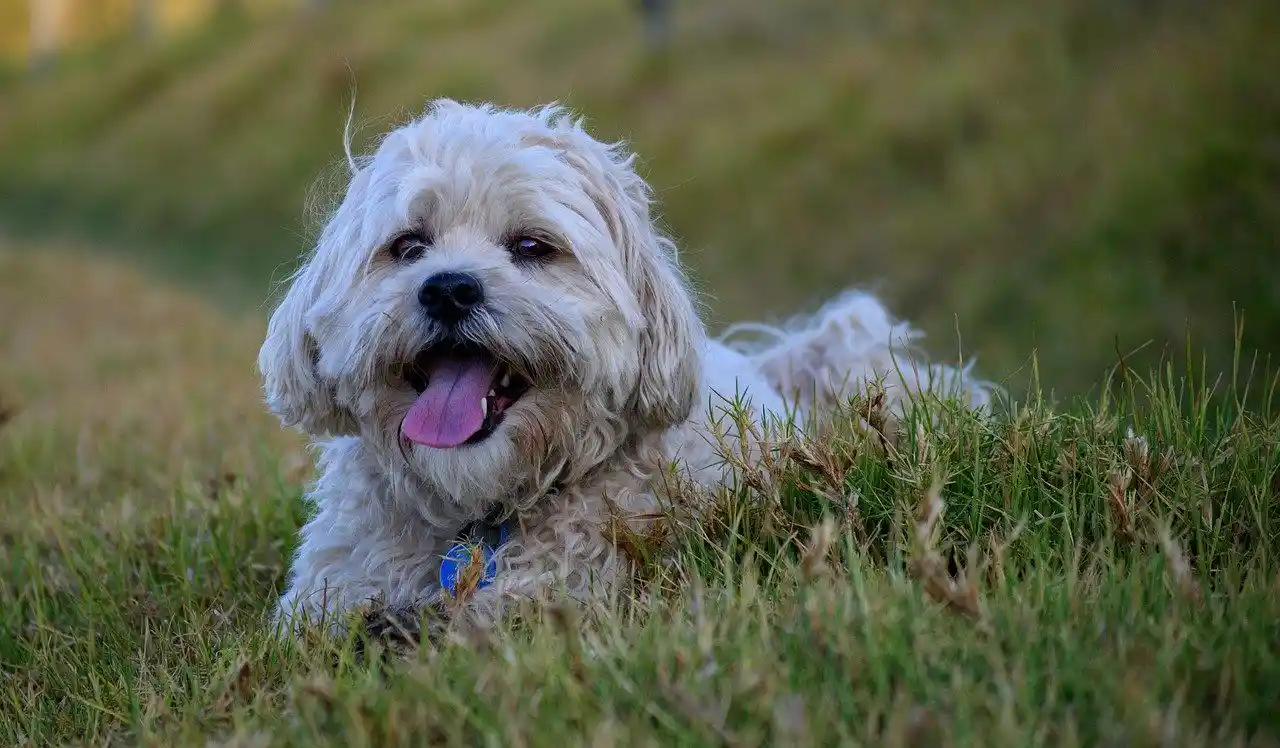
Maltese Shih Tzus commonly shed at a low level. Hair completes a growth cycle and releases, but a long coat can catch it before it reaches clothing or floors. That is why brushing may collect hair when the sofa looks clean.
Genetics matter because this is a mix, not a standardized coat type. One dog may inherit fine, silky hair; another may develop a denser coat with undercoat. Age, skin health, parasites, friction, and indoor climate can change what you notice.
Expect a few hairs on a brush, bed, or dark shirt. Clumps, exposed skin, or a sharp change from that dog’s baseline are not routine low shedding. Low visible shedding still requires regular detangling and coat care.
No, excessive hair loss is not expected in a healthy Maltese Shih Tzu. Compare the dog with its own baseline instead of a breed label. A fuller Shih Tzu-like coat may release more than a fine Maltese-like coat without either dog being abnormal.
Compared with short-coated small dogs such as Beagles or Jack Russell Terriers, many Malshis leave less visible hair but need more brushing and clipping. Breed-to-breed rankings are only rough guides because crossbred puppies do not inherit a predictable halfway coat.
Use a seven-day check: note hair on bedding, inspect the skin, and photograph suspicious areas. If the amount rises quickly or the dog scratches, licks, smells different, or develops bare spots, arrange veterinary assessment rather than buying a stronger shedding tool.
A puppy’s soft early coat changes as adult hair develops, but there is no dependable Malshi-specific timetable that makes every patch of loss normal. Mixed-breed genetics, health, grooming, and coat damage all affect what owners see.
Normal change is usually gradual. The coat may feel less fluffy, look uneven, or collect more hair in the brush without leaving sore skin. Temporary increases can follow tangles, rough brushing, illness, or major routine changes, but stress should not be assumed until medical causes are considered.
Keep a simple record of weekly photos, grooming findings, scratching, and food or product changes. That evidence helps a veterinarian distinguish coat development from breakage, inflammation, or true alopecia, which means partial or complete hair loss.

Yes, puppies replace their early coat as they mature, although the start and finish vary. Avoid treating four to six months as a guaranteed schedule for every Maltese Shih Tzu. More useful clues are gradual texture change, healthy-looking skin, normal behavior, and no expanding bald areas.
During brushing, separate shed hair from breakage. A released hair is often full length, while many short, snapped pieces suggest tangles, friction, or harsh grooming. Do not pull at mats or repeatedly rake delicate hair. If thinning is localized, progressive, itchy, crusted, or painful, ask a veterinarian to examine the puppy.
Do not assume that hair loss down a three-month-old puppy’s back is a normal coat blow. A puppy coat can change, but a strip of thinning hair can also reflect rubbing, matting, parasites, infection, or inflammation. Juvenile demodicosis is one possibility, not a home diagnosis; the Companion Animal Parasite Council’s canine demodicosis guidance explains that diagnosis requires finding mites through appropriate veterinary testing.
Use this observation guide while arranging care:
| What You See | Next Step | Why |
|---|---|---|
| Even coat change, normal skin, no itch | Photograph weekly; mention at routine visit | May be development or breakage |
| Localized thinning that persists or expands | Book a veterinary appointment | Needs skin and parasite assessment |
| Redness, sores, crusts, odor, pain, or marked itch | Seek prompt veterinary care | Could indicate active disease |
| Illness, poor appetite, or lethargy with hair loss | Contact veterinarian promptly | Hair loss is not isolated |
Do not apply essential oils, medicated shampoo, or parasite products made for another pet. Some treatments are age and weight dependent, and bathing before an exam may alter what the veterinarian can see.
Use case: A puppy has a faint thin line under a snug harness, normal skin, and no itch. The owner removes the friction source, photographs the area, and books advice if it does not improve. If redness or spread appears, the plan changes to prompt veterinary care.
Malshi coats can be fine and straight, wavy, or dense and plush. They may lean toward the Maltese parent, whose official Maltese breed standard describes a single coat without undercoat, or toward the Shih Tzu parent, whose official Shih Tzu breed standard calls for a double coat. A mix can fall anywhere between those descriptions.
The key distinction is shedding versus matting. Fine, long hair may release little onto furniture while tangling quickly because loose strands remain trapped. A denser undercoat can add loose fibers and make drying and combing more demanding. Coat appearance alone cannot guarantee future shedding, especially in a young puppy.

Length changes visibility, not whether hair has a growth cycle. Long strands are easier to spot in a brush, while short, broken hairs scatter. Density and undercoat influence volume; curl and wave help retain released hair. Skin disease and coat damage can raise loss regardless of inherited type.
Use coat clues to set a starting routine:
| Coat Clue | Likely Effect | Practical Response |
|---|---|---|
| Fine, silky, little undercoat | Low visible shedding; high tangle risk | Gentle line brushing and comb check |
| Wavy mixed coat | Loose hair may stay trapped | Check friction zones and hidden mats |
| Dense plush coat | More retained undercoat and slower drying | Section coat; dry fully |
| Short clipped coat | Easier access; not less hair cycling | Brush lightly; inspect skin |
A professional grooming package should follow a hands-on coat assessment. Ask for brushing, combing, careful drying, nail and ear care, and a realistic home schedule. Avoid promises to stop shedding; grooming removes loose hair but cannot stop normal growth cycles.
Manage loose hair by preventing tangles and breakage, not by scraping the coat. A safe home routine is:
Bathe when dirty or as advised for the chosen coat, using dog-formulated shampoo and thorough rinsing. Bathing too often for that individual may worsen dryness; too little can allow debris and tangles to build. Never cut a mat with scissors against hidden skin.
Frequency depends on coat length, density, activity, and tangle history. Check long or cottony coats daily. A short puppy cut may need brushing several times weekly, but inspect armpits, ears, legs, the collar area, and tail after walks or harness use.
Use this schedule as a starting point, then adjust:
| Task | Starting Frequency | Tool | Reassess If |
|---|---|---|---|
| Daily check | Daily | Fingers and eyes | Redness, debris, thinning |
| Full brush | Daily long; several times weekly short | Brush and steel comb | Pulling, skin contact, repeated snag |
| Bath and dry | When dirty or advised | Dog shampoo, towel, safe dryer | Dry skin, odor, damp roots |
| Professional trim | By style and matting speed | Qualified groomer | Tight mats or distress |
Blade-style de-shedding tools are not default choices for every Malshi. On fine coats, they may cut healthy hair or irritate skin. Ask a groomer to identify a genuine undercoat first.
If you choose professional grooming, request a coat map at the first visit: length, density, tangle zones, skin findings, and recommended home tools. That turns a generic package into a repeatable care plan.
A balanced diet supports normal skin and hair growth, but food cannot override coat genetics or treat alopecia. Choose a product labeled complete and balanced for the dog’s life stage and feed to healthy body condition.
Protein supplies amino acids used in hair and skin. Essential fatty acids, vitamins, and trace minerals also matter, but excess can be harmful. The World Small Animal Veterinary Association’s nutrition selection guidance recommends judging the manufacturer’s expertise, quality control, and nutritional adequacy rather than marketing terms such as premium.
Do not switch automatically to grain-free, raw, high-protein, or coat formulas because shedding increased. A veterinarian should assess calories, treats, digestive signs, medications, parasites, and skin disease. Fish oil or mineral supplements can cause adverse effects, so ask whether one is justified and what dose is appropriate.
Compare the bag’s nutritional adequacy statement with your dog’s life stage, record treats, and bring the label to a veterinary visit. Hydration supports health, but adding water is not a proven shedding cure.
Sudden or excessive loss deserves attention because shedding and alopecia are not the same. Possible causes include flea or mite infestation, bacterial or fungal infection, allergy-related scratching, friction, grooming injury, and hormonal or systemic disease. The MSD Veterinary Manual’s veterinary alopecia overview shows why pattern, skin findings, and history guide testing rather than appearance alone.
Arrange a veterinary visit for persistent thinning, recurring itch, scaling, or coat change. Seek faster advice for open sores, pus, strong odor, marked pain, rapid spread, facial swelling, breathing trouble, lethargy, or reduced appetite. Do not use leftover antibiotics, steroid creams, human dandruff shampoo, or another animal’s parasite medication.
Branching next-step quiz: This is a triage aid, not a diagnosis.
Question 1: Is the skin red, sore, crusted, wet, smelly, rapidly worsening, or is the dog unwell?
If yes, contact a veterinarian promptly. If no, continue to Question 2.
Question 2: Is there persistent scratching, licking, broken hair, fleas, or a clearly expanding patch?
If yes, book an examination. If no, continue to Question 3.
Question 3: Is the change mild, stable, and limited to hair collected during brushing with normal skin?
If yes, photograph it, review grooming, and monitor briefly. If it persists or changes, book veterinary advice. If no, book an examination.
Use case: An adult Malshi suddenly scratches at night and loses hair over the rump. Changing brushes will not address that pattern. The next step is an exam with a timeline of parasite prevention, products, food, and symptoms. Testing may be needed; appearance alone cannot predict a diagnosis.
Some Malshis release more hair at certain times, especially with a denser Shih Tzu-like coat. A dramatic spring or fall coat blow is not inevitable for every mix. Indoor light, temperature, humidity, bathing, clothing, and friction can alter what an owner notices.
Use the dog’s baseline. During a mild increase, brush in sections, inspect the skin, wash bedding, and keep wet coat fully dried. Dry air may coincide with flaky skin, but a humidifier or coat oil is not a universal treatment. Ask a veterinarian before adding topical products, especially if the dog licks them.
If hair loss is one-sided, sharply defined, itchy, inflamed, or accompanied by behavior or appetite changes, do not wait for the season to pass. Environmental explanations come after urgent and treatable medical causes are considered.

Malshis cannot be ranked with precision against Maltipoos, purebred Maltese, or Shih Tzus because genes do not blend evenly. Use parent coat traits to estimate a puppy’s likely range, then judge the individual coat. No mix is guaranteed hypoallergenic; pet allergy guidance confirms that proteins in dander, saliva, and urine can trigger symptoms, not simply loose hair.
This comparison supports questions, not promises:
| Dog Type | Expected Loose Hair | Main Grooming Issue | Buying Or Adoption Check |
|---|---|---|---|
| Malshi | Usually low but variable | Mats and hidden loose hair | Meet the dog; inspect adult relatives when possible |
| Maltese | Low visible shedding | Fine single coat tangles | Review official coat standard |
| Shih Tzu | Low to variable visible shedding | Dense double coat | Expect more drying and section work |
| Maltipoo | Variable despite curl | Mats close to skin | Do not assume Poodle genes dominate |
| Short-coated small breed | Often more visible hair | Less detangling | Compare cleanup with clipping needs |

Malshis shed lightly year-round, and some show a mild seasonal increase with denser coats. A sudden coat blow, bald patch, or itchy skin is not explained safely by season alone. Compare the change with that dog’s baseline and seek advice if it persists.
Protein, essential fatty acids, vitamins, and minerals all support skin and hair when supplied in a complete, balanced diet. Deficiency, excess, disease, and poor calorie balance can affect coat quality. Do not add supplements solely for shedding without veterinary guidance because more is not always better.