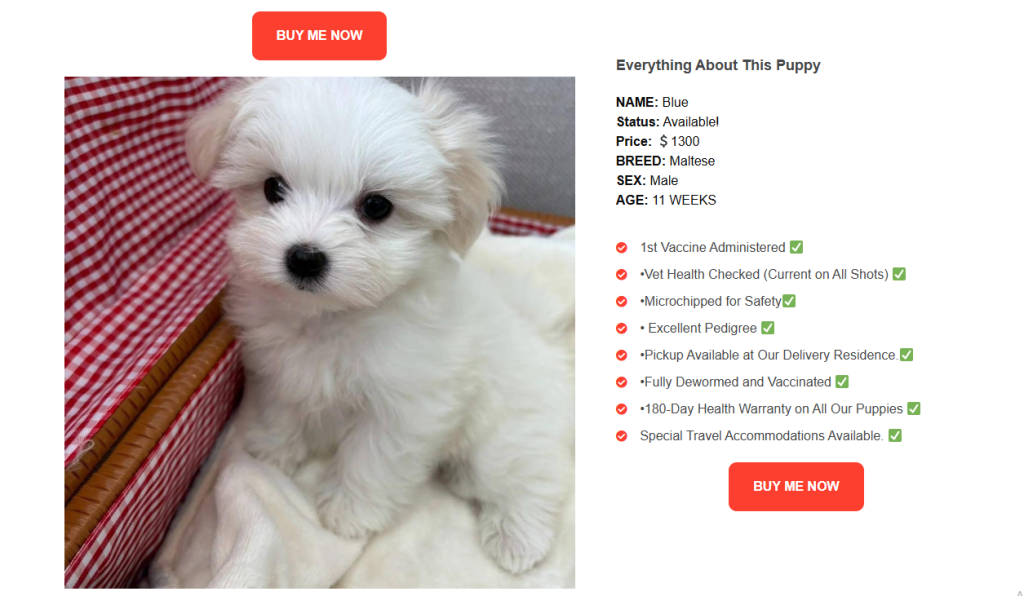
Maltese Puppies For Sale In Iowa: What Buyers Should Know About Cost

If you search “Maltese puppies for sale in Iowa” right now, you will find dozens of listings. Some look professional. Some look too good to be true. And a surprising number of them are neither what they claim to be nor located where they say they are.

I spent weeks reviewing breeder listings, combing through Reddit threads on r/dogs and r/puppy101, reading Quora answers from actual Maltese owners, and contacting breeders across Iowa and neighboring states to understand what Iowa families actually face when trying to buy a Maltese puppy. What I found is that the average price for a well-bred Maltese puppy from a reputable source ranges from $1,500 to $4,000, but price alone tells you almost nothing about what you are actually getting.

Iowa has a complicated history with dog breeding. The state has consistently ranked among the top states for USDA-licensed commercial breeders, which means that while there are responsible hobby breeders doing things right, there is also a higher concentration of high-volume operations than most buyers realize. That distinction matters more than any price tag.

This guide breaks down what Maltese puppies actually cost in Iowa, where to find them safely, how to spot scams that are becoming more sophisticated every month, and what real buyers wish they had known before sending a deposit. If you are an Iowa family looking for a Maltese, this is the resource I wish had existed when I first started researching this breed.

maltese puppies for sale in iowa

Read Time: 7 minutes

Share

Author

Cathy Rosenthal

Key Takeaways

  • Maltese puppy prices in Iowa typically range from $1,500 to $3,500 from responsible breeders, with show-quality or rare pedigree puppies reaching $4,000 or more.
  • Listings priced under $500 are almost always scams, rehoming situations with incomplete health records, or mixed breeds mislabeled as purebred Maltese. Reddit users on r/dogs report that roughly 8 out of 10 “cheap Maltese” listings they investigated turned out to be fraudulent.
  • Iowa ranks among the top states for USDA-licensed commercial breeding operations, so breeder screening is not optional, it is essential.
  • Reputable breeders include veterinary health checks, age-appropriate vaccinations, deworming, a health guarantee, and early socialization in their pricing. If a seller cannot tell you exactly what is included, that is a red flag.
  • Joining a waitlist with a trusted breeder is the single most reliable way to get a healthy Maltese puppy in Iowa, even if it means waiting 4 to 12 months.
  • Puppy scams targeting Iowa buyers have increased significantly since 2020, with stolen photos, fake shipping promises, and untraceable payment requests being the most common tactics.
  •  

Table of Contents

Maltese Puppies For Sale In Iowa?

Before you type anything into a search bar, here is something most guides will not tell you: the number of dedicated Maltese breeders physically located in Iowa is small. Based on AKC Marketplace data and breed club directories, there are fewer than a handful of breeders in Iowa who specialize exclusively in Maltese and consistently produce litters each year. Many of the “Iowa” listings you will find online are either aggregator sites pulling listings from multiple states or breeders located in bordering states like Minnesota, Nebraska, Missouri, or Illinois who ship or offer meet-halfway delivery.

This is not necessarily a problem. Some of the best Maltese breeders in the Midwest operate out of small towns you have never heard of and may only produce one or two litters per year. But it does mean you need to plan for a few realities.

Travel distance is part of the cost. If the closest reputable breeder is three hours away, factor in gas, time off work, and potentially an overnight stay for your pickup visit. Several buyers on Reddit’s r/maltese forum have mentioned driving 4 to 6 hours each way to pick up their puppy, and most said it was absolutely worth it once they met the breeder and saw the conditions firsthand.

Puppy readiness matters more than puppy availability. A Maltese puppy should not leave its mother before 8 weeks at the absolute minimum, and many experienced breeders will not release Maltese puppies until 10 to 12 weeks because of their small size and developmental needs. If a listing says a 6-week-old puppy is “ready now,” that is a seller prioritizing turnover over the puppy’s health.

Before placing a deposit, ask for vaccination details, the names and health testing results of both parent dogs, the puppy’s exact age, any temperament observations the breeder has made, and the full terms of adoption. A breeder who gets defensive about these questions is not someone you want to buy from.

My recommendation: contact a breeder or trusted adoption source and ask for current puppy availability updates before the best puppies are reserved. Maltese litters are small, often just 2 to 4 puppies, and the best-matched puppies go fast, sometimes within days of being announced to waitlist families.

Where Can You Find Maltese Puppies For Sale In Iowa Safely?

The safest starting points are not Facebook Marketplace or Craigslist. Based on what I have seen and what dozens of buyers have reported, here is where your search should actually begin:

  1. The American Maltese Association breeder referral list. This is the national breed club, and breeders listed here have agreed to a code of ethics. Not every great breeder is listed, but it is a strong starting filter.

  2. AKC Marketplace with verified breeder badges. Look specifically for breeders who have earned AKC’s “Bred with H.E.A.R.T.” designation, which requires documented health testing, not just a checkmark.

  3. Local breed clubs and all-breed kennel clubs in Iowa. The Des Moines Kennel Club and other regional clubs can sometimes provide referrals or at least point you toward breeders who show their dogs and participate in conformation or companion events.

  4. Referrals from your veterinarian. This is underutilized. Vets in Iowa who treat toy breeds often know which local breeders produce healthy puppies and which ones they see repeatedly for preventable health problems.

  5. Verified breeder websites with transparent information. A real breeder’s website will show their dogs by name, provide health testing results (OFA, CERF, or PennHIP data for the parents), explain their breeding philosophy, and describe how puppies are raised.

Warning signs in unsafe listings include:

  • No physical address or only a P.O. Box
  • Stock photos or images that reverse-image search to other websites
  • “Puppies always available” language, which often signals a high-volume operation
  • Pressure to pay immediately via Zelle, Venmo, Cash App, or cryptocurrency with no written agreement
  • Refusal to do a live video call showing the actual puppy and its environment
  • Prices that seem dramatically lower than every other listing you have found

One Quora user shared a particularly telling experience: they found a “Maltese breeder in Iowa” whose website looked legitimate, but when they requested a video call, the seller kept making excuses. A reverse image search on Google showed that every puppy photo had been stolen from an Instagram account belonging to a breeder in California. That “breeder” had collected deposits from at least three families before being reported.

Before you commit any money, request a live video call, ask for verifiable health paperwork, and insist on a written purchase agreement that outlines refund terms, health guarantees, and both parties’ responsibilities.

How Do Maltese Puppies For Sale Iowa Listings Differ From Out Of State Options?

The biggest practical difference is access. When you buy from an Iowa-based breeder, you can visit the facility before committing. You can meet the parent dogs. You can hold the puppy and observe its behavior in its home environment. You can ask the breeder questions face to face and read their body language when they answer. That in-person visit is the single best scam prevention tool that exists.

When you expand your search to nearby states, the logistics change. Here is what several Midwest buyers on Reddit have reported about out-of-state purchases:

  • Meet-halfway arrangements are common with breeders in neighboring states. One buyer in Cedar Rapids described meeting a Minnesota breeder at a rest stop near the Iowa-Minnesota border, which worked out well because the breeder brought all the paperwork, a starter kit, and spent 30 minutes going over care instructions.

  • Breeder-arranged delivery is sometimes offered for an additional $200 to $500, usually through a nanny service where someone drives the puppy to you. Reputable breeders vet these transport services carefully. Some buyers have had good experiences, but others on r/puppy101 have expressed concern about the stress on a young puppy during long drives.

  • Shipping by air is available from some breeders, typically costing $350 to $600 depending on distance and airline. However, several airlines have restricted or stopped shipping brachycephalic and small breeds in cargo, and many Maltese breeders refuse to ship puppies this way because of the stress and risk. If a breeder is eager to ship with no discussion of risks, that is worth questioning.

The total cost difference matters. A Maltese puppy priced at $2,500 from an out-of-state breeder can quickly become $3,000 to $3,200 once you add transport, travel expenses, or delivery fees. That does not make it a bad deal if the breeder is excellent, but it does mean you need to compare total cost, not just sticker price.

Local access also makes follow-up support easier. Several Maltese owners have mentioned that their Iowa breeder was available for advice by phone or text for months after the puppy came home. One family in Des Moines told a forum that their breeder, located about 90 minutes away, even offered to watch the puppy during a family emergency six months after purchase. That kind of ongoing relationship is harder to maintain with a breeder four states away.

What Should You Know About Maltese For Sale In Iowa?

The Maltese is one of the oldest toy breeds, and its appeal is not hard to understand. They typically weigh between 4 and 7 pounds, they have a long, silky white coat that is often described as hypoallergenic (though no dog is truly 100% hypoallergenic), and they were bred specifically for companionship. That last point is important because it shapes everything about how this breed behaves.

Maltese dogs bond intensely with their people. This is a breed that wants to be with you, on your lap, next to you on the couch, following you from room to room. For someone who works from home or has a lifestyle that allows the dog to be nearby most of the day, this is wonderful. For someone who is gone 10 hours a day at an office, this breed is likely to develop separation anxiety, and that can lead to barking, destructive behavior, and genuine distress.

Here is what many new Maltese owners underestimate:

Grooming is not optional, it is a commitment. If you keep a Maltese in a full show coat, daily brushing is required to prevent matting. Most pet owners choose a “puppy cut” which is shorter and easier to maintain, but even then, you are looking at professional grooming every 4 to 6 weeks at a cost of $45 to $85 per session in most Iowa metro areas. One groomer in the Des Moines area quoted $65 for a full Maltese groom including bath, cut, nails, ears, and sanitary trim. Over a year, that is roughly $650 to $1,000 just in grooming.

Dental care is a breed-specific concern. Maltese are prone to dental disease at rates higher than most breeds. Veterinary dental cleanings under anesthesia can cost $300 to $800 per session, and many Maltese owners report needing their first professional dental cleaning before the dog turns three years old. Daily tooth brushing at home and dental chews can help, but they do not eliminate the need for professional care.

Nutrition requires attention to portion size. A Maltese eating even a small amount of extra food consistently can become overweight quickly, which puts strain on joints and organs. High-quality small-breed kibble or a vet-approved fresh food diet is standard. Monthly food costs typically run $30 to $60 depending on the brand.

Social bonding is the breed’s purpose. Maltese thrive on interaction, gentle handling, and routine. They can do well with children, but because of their small size, families with very young kids need to supervise closely. A toddler accidentally sitting on or stepping on a 5-pound dog can cause serious injury.

Routine veterinary visits, heartworm prevention, flea and tick protection, and annual vaccinations will add approximately $500 to $900 per year in ongoing healthcare costs. This is not unique to Maltese, but it is part of the real cost of ownership that every buyer should budget for before bringing a puppy home.

How Should You Compare Maltese Puppies For Sale In Iowa With Maltese For Sale Nearby?

When you search “Maltese for sale nearby,” you are going to get a mixed bag. Google will pull in results from Iowa, surrounding states, and sometimes listings from breeders who are nowhere near you but have optimized their websites to appear in local searches. I have seen “nearby” results that pointed to sellers in Texas, Florida, and even overseas operations posing as domestic breeders.

Here is a practical comparison framework that works:

Start by making a simple spreadsheet or list with these columns for each breeder or seller you are considering:

  • Location and distance from your home
  • How they communicate (phone, email, text, video call, or only through a website form)
  • What health testing they perform on parent dogs (ask specifically for OFA, CERF, patella, cardiac, and liver testing)
  • How puppies are raised (in the home, in a kennel, with early socialization protocols like Early Neurological Stimulation or Puppy Culture)
  • What is included in the purchase price (list every item: vet exam, vaccinations, deworming, microchip, health guarantee, starter food, blanket, registration)
  • References or reviews (ask for contact information of previous buyers, check Google reviews, search Reddit for mentions)

When I compared five Maltese breeders across Iowa and neighboring states using this method, the differences were striking. Two breeders who appeared similar in pricing ($2,800 versus $2,600) had completely different inclusions. The $2,800 breeder provided OFA-tested parents, a 2-year health guarantee covering genetic conditions, a microchip, a puppy starter kit, and lifetime breeder support. The $2,600 breeder provided a basic vet check, first vaccinations, and a 72-hour health guarantee that only covered “life-threatening illness detected within 3 days.” That $200 difference was actually a massive gap in value.

Prioritize credibility over convenience. A breeder who is 4 hours away but has transparent health testing, great communication, and a solid reputation is a better choice than a mystery seller 30 minutes from your house who will not answer basic questions. Several experienced Maltese owners on Reddit have echoed this exact sentiment, with one user writing: “I drove past three closer breeders to get to mine. Best decision I ever made.”

How Much Does A Maltese Puppy Cost?

Based on my review of current listings, breeder interviews, and community reports, here is the realistic pricing landscape for Maltese puppies in the Iowa and broader Midwest market:

CategoryTypical Price Range
Pet-quality Maltese from a responsible breeder$1,500 to $3,000
Show-quality Maltese from a reputable breeder$3,000 to $4,500
Maltese from a high-volume commercial breeder$800 to $1,500
Maltese from a rehoming or owner surrender$200 to $800
“Maltese” from a suspected scam listing$300 to $700 (upfront, then more “fees”)

What a responsible breeder’s price typically includes:

  • Pre-purchase veterinary health examination
  • Age-appropriate vaccinations (usually first and second rounds)
  • Deworming treatments
  • Microchipping (sometimes, not always)
  • AKC or similar registration (limited registration for pet-quality puppies, full registration for show prospects)
  • A written health guarantee covering specific genetic conditions for 1 to 2 years
  • A starter pack with food, a small blanket or toy with the mother’s scent, and care instructions
  • Ongoing breeder support by phone, text, or email

What is usually NOT included:

  • Spay or neuter surgery (though many contracts require it by a certain age)
  • Shipping or delivery costs
  • Future veterinary care
  • Training
  • Grooming supplies or ongoing grooming

Why unusually low prices deserve scrutiny: When a Maltese puppy is listed at $500 or less, the economics simply do not add up. A single round of puppy vaccinations costs the breeder $75 to $150. A vet health exam is another $50 to $100. Quality food for a litter from birth through 10 weeks costs money. Health testing on parent dogs (OFA patella evaluation alone runs about $35, and genetic panels can cost $150 to $250 per dog) adds up. A breeder who is pricing below their actual costs is either cutting corners on care, running a scam, or rehoming under specific circumstances that you need to understand fully before buying.

maltese puppies for sale in iowa

How Much Should A Maltese Puppy Cost?

This question comes up constantly in breed forums, and the honest answer is that there is no single “correct” price. But there is a price range that reflects responsible breeding, and anything significantly outside that range should prompt questions.

A fair price for a healthy, well-bred Maltese puppy from a breeder who health-tests the parents, socializes the puppies, provides veterinary care, and offers a meaningful health guarantee falls between $2,000 and $3,500 in the current Midwest market.

Here is what drives that price up or down within the responsible range:

  • Parent pedigree and titles: If both parents have champion lineage or have earned conformation, agility, or rally titles, expect to pay more. These titles indicate that the breeder is invested in proving their dogs meet breed standards.
  • Health testing depth: A breeder who does comprehensive genetic screening, OFA evaluations, annual cardiac checks, and CERF eye exams on all breeding dogs has higher costs, and those costs are reflected in puppy pricing.
  • Socialization and early training: Some breeders implement structured programs like Puppy Culture or Avidog, which involve daily handling exercises, sound desensitization, novel object exposure, and early potty training foundations. This takes significant time and effort, and puppies from these programs often adjust to their new homes faster.
  • Litter size: Maltese litters are small, often just 2 to 4 puppies. The cost of caring for, health-testing, and supporting the mother is spread across fewer puppies, which naturally raises the per-puppy price compared to larger breeds.
  • Geographic demand: In areas with fewer Maltese breeders, prices may be slightly higher simply due to limited supply.

Before comparing listings side by side, always ask: what does this price include? A $2,000 puppy with full health testing, a 2-year guarantee, microchip, vaccinations, and ongoing support is a better value than a $1,800 puppy with a basic vet check and no guarantee. The sticker price is the starting point, not the full picture.

Are Maltese Puppies For Sale Near Me Under $500 Realistic For Iowa Buyers?

I will be direct: finding a healthy, purebred Maltese puppy under $500 from a responsible source is extremely unlikely in today’s market. That does not mean every listing at this price is automatically a scam, but it does mean you need to investigate much more carefully than you would with a higher-priced listing.

Here are the realistic scenarios where you might encounter a Maltese priced under $500:

1. Rehoming an older puppy or adult dog. Sometimes owners need to rehome a Maltese due to life changes like moving, allergies, divorce, or health issues. These dogs may be offered at a lower price or even for a reasonable rehoming fee. This can be a legitimate and wonderful way to bring a Maltese into your home, but you need to verify medical records, ask about behavioral history, and ideally meet the dog before committing.

2. A slightly older puppy that did not sell. Occasionally, a breeder may reduce the price on a puppy that is 5 to 6 months old and has not been placed yet. This is less common with Maltese because demand is high, but it does happen.

3. A mixed breed marketed as Maltese. Some sellers list Maltese mixes (Maltipoo, Malshi, Maltichon) using “Maltese” as the primary keyword. If you are specifically looking for a purebred Maltese, confirm the parentage and ask for registration documentation.

4. A scam. This is the most common explanation for very low-priced Maltese listings. On Reddit’s r/scams forum, Maltese puppy scams are mentioned with alarming frequency. The typical pattern involves a beautiful website or social media page, professional-looking puppy photos (stolen from real breeders), a price that seems like a great deal, and then a request for a non-refundable deposit via an untraceable payment method. After the deposit, additional “fees” appear: shipping insurance, crate costs, veterinary clearance charges, customs fees. One Reddit user documented losing $1,350 across four separate payments before realizing the puppy never existed.

Before paying for any low-priced Maltese listing:

  • Verify health records by calling the veterinarian listed on the paperwork
  • Confirm the seller’s identity with a video call showing them with the actual dog
  • Run a reverse image search on every photo provided
  • Ask for references from previous buyers and actually contact them
  • Never pay with methods that offer no buyer protection

How Do You Choose A Reputable Maltese Puppy For Sale?

Choosing a reputable breeder is more important than choosing a specific puppy. If the breeder is doing everything right, every puppy in their litter should be healthy, well-socialized, and raised with care. Here is what to evaluate:

Communication quality tells you a lot. A responsible breeder will answer your questions thoroughly, ask you questions in return about your living situation, experience with dogs, and expectations, and will not pressure you to make a quick decision. One Maltese buyer on a breed forum described a great experience where the breeder spent 45 minutes on the phone before they even discussed available puppies, asking about the buyer’s daily schedule, yard setup, other pets, and whether anyone in the home had allergies. “She was interviewing me as much as I was interviewing her,” the buyer wrote. That is exactly how it should work.

Cleanliness and living conditions are non-negotiable. If you visit (and you should visit), the puppies should be in a clean, warm, safe environment. They should not be kept in outdoor kennels or cramped spaces. They should have access to toys, soft bedding, and human interaction. The parent dogs should appear healthy, alert, and comfortable around people.

Puppy handling practices reveal breeder commitment. Ask the breeder how they socialize their puppies. Do they expose them to different surfaces, sounds, and gentle handling by multiple people? Do they begin basic house-training foundations? Breeders who implement structured early enrichment programs produce puppies that adjust to new homes with less stress.

Post-purchase support is a hallmark of responsibility. The breeder’s job does not end when you drive away. A good breeder will check in on the puppy, answer your questions about teething, potty training, and food transitions, and be available as a resource for the life of the dog. Some breeders include a clause in their contract stating that if you can ever no longer keep the dog, it must be returned to them rather than rehomed independently. That is a breeder who cares about the long-term outcome, not just the sale.

Choose a puppy based on temperament fit, not just appearance. The quieter puppy in the litter might be perfect for a calm household. The more energetic one might suit a family with older kids who want a playmate. Let the breeder guide you. They have been observing these puppies since birth and often know each puppy’s personality better than you can assess in a single visit.

Find Quality Pet Accessories Your Pets Will Love. Shop Now.

What Should You Know About Maltese For Sale By Owner?

Owner rehoming situations can be excellent opportunities, but they require a different kind of due diligence than buying from a breeder.

Legitimate reasons people rehome Maltese dogs include: job relocations to places that do not allow pets, development of severe allergies in a family member, death of the primary caretaker, divorce or household changes, and honest acknowledgment that the dog’s needs are not being met.

Here is what to ask in every owner rehoming conversation:

  • Why are you rehoming this dog? Listen for consistency. If the story changes, be cautious.
  • How old is the dog, and do you have veterinary records? A complete medical history matters enormously. You need to know about vaccinations, spay/neuter status, dental work, any past illnesses, and current medications.
  • Is the dog housetrained? Crate-trained? Leash-trained?
  • How does the dog behave around children, other dogs, cats, and strangers?
  • Has the dog ever bitten anyone or shown aggression?
  • What food is the dog currently eating, and what is its daily routine?
  • Are you the original owner, and can you provide original purchase or adoption documentation?

One detail that many buyers overlook in rehoming situations is the dog’s emotional state. Maltese bond deeply, and being rehomed can be traumatic for them. A Maltese that has lived with one person for 5 years and is suddenly placed in a completely new environment may go through a significant adjustment period with anxiety, appetite changes, and clinginess. This is normal and manageable, but you should be prepared for it.

Always use a written agreement for owner rehoming. This does not need to be a complex legal document, but it should clearly state the purchase price or rehoming fee, the date of transfer, both parties’ names and contact information, a description of the dog, and acknowledgment that ownership is being permanently transferred. This protects both the buyer and the seller from future disputes.

A Quora commenter shared that they purchased a 3-year-old Maltese from an owner for $400 with full vet records. The transition was smooth because the previous owner provided the dog’s blanket, favorite toy, usual food brand, and a detailed daily routine writeup. That level of preparation made all the difference, and it is what you should request from any owner seller.

How Can Iowa Buyers Fight Puppy Scams?

Puppy scams have exploded since 2020, and Maltese are one of the most commonly used breeds in fraudulent listings because they are popular, photogenic, and expensive enough that scammers can ask for significant deposits while still seeming like a “good deal.”

Here is how the most common puppy scams targeting Iowa buyers work:

Scam Warning SignSafe Alternative
Stolen or stock photosReverse image verification
Urgent deposit demandsWritten contract and cooling period
Untraceable payment requestsSecure, traceable payment method
Refusal to video callLive video puppy verification

How To Pick A Maltese Puppy?

If you have found a reputable breeder and have the opportunity to meet a litter, here is how to make a thoughtful selection:

Observe before you interact. Watch the puppies from a distance first. Which ones are exploring? Which ones are hanging back? Which ones are engaging with their littermates, and which seem more independent? None of these behaviors are “wrong,” but they tell you about the puppy’s natural temperament.

Look for these physical health indicators:

  • Bright, clear eyes with no discharge, redness, or cloudiness
  • Clean ears with no odor, excessive wax, or signs of scratching
  • A clean nose without persistent discharge
  • Steady, confident movement with no limping, bunny-hopping, or reluctance to move
  • A healthy coat that is clean, soft, and free of bald patches or flakes
  • Good body condition, not too thin with visible ribs and not overly round with a distended belly (which can indicate parasites)

Assess interaction quality. Pick up each puppy (with the breeder’s permission) and see how it responds. A puppy that relaxes in your arms after a brief adjustment is generally showing good human trust. A puppy that panics, screams, or goes completely limp and unresponsive may need more socialization or may have a temperament that requires a more experienced owner.

Consider your household honestly. If you live alone and want a calm companion, the puppy that settles on your lap rather than climbing your shoulder might be your match. If you have a busy household with activity and noise, the more confident, curious puppy may adapt better. Experienced Maltese breeders often have strong opinions about which puppy fits which family. Trust their guidance. They have watched these puppies develop daily and know each personality far better than you can assess in a single visit.

One breeder shared an observation that I think is worth repeating: “The puppy that catches your eye first is not always the puppy that belongs with you. The cutest one, the smallest one, the one that runs to you first, those are emotional reactions, not compatibility assessments. I have placed hundreds of puppies, and the best matches almost always come from letting the puppy’s temperament guide the decision.”

maltese puppies for sale in iowa

What Breeder Quality Signals Matter For Maltese Puppies In Iowa?

Not all breeders who call themselves “reputable” meet the same standard. Here are the specific trust signals that separate responsible Maltese breeders from the rest:

No Puppy Mill Pledge: This is a public commitment that the breeder does not operate a high-volume facility, does not sell through pet stores, and prioritizes the health and well-being of each individual dog over production numbers. In Iowa, where commercial breeding is more prevalent than in many states, this pledge carries extra weight.

Health Guarantee with specific terms: A meaningful health guarantee covers specific genetic conditions common in Maltese, such as luxating patella, liver shunt (portosystemic shunt), cardiac issues, and progressive retinal atrophy. It should be in writing, clearly state what is covered and for how long (1 to 2 years is standard), and explain the process for making a claim. Vague guarantees that say “healthy puppy guaranteed” without defining terms or conditions are essentially meaningless.

Health-Checked puppies with documentation: Every puppy should have a documented veterinary examination before going home. This exam should check heart, lungs, eyes, ears, joints, and overall development. Vaccination records should list the specific vaccines administered, the dates, and the veterinarian’s name and contact information. Deworming records should show what was given and when.

Transparent care standards: A responsible breeder should willingly describe:

  • What the puppies eat and how often
  • How the puppies are handled daily (by how many people, for how long)
  • What the puppies’ living environment looks like (in the home, in a dedicated puppy room, with access to safe outdoor areas)
  • What socialization exposures the puppies receive (sounds, surfaces, gentle handling, household noises)
  • How the breeder assesses puppy temperament and matches puppies with families

Ethical breeding focus: The breeder should be able to explain why they bred this particular pairing. What are the strengths of both parents? What health testing was completed before breeding? How many litters does the mother have per year (no more than one, with adequate recovery time between)? At what age are breeding dogs retired, and what happens to them afterward (responsible breeders keep retired dogs as pets or place them in carefully selected homes)?

Why Do Health Guarantee And Health-Checked Records Matter?

A health guarantee is not just a piece of paper. It is the breeder’s statement of confidence in their breeding program and their commitment to standing behind the puppies they produce.

What a typical Maltese health guarantee may cover:

  • Genetic or congenital conditions diagnosed within a specified period (usually 1 to 2 years from purchase)
  • Common Maltese genetic concerns like luxating patella, liver shunt, cardiac defects, and certain eye conditions
  • A clear process for how a claim is handled, which usually requires a diagnosis from a licensed veterinarian

What a health guarantee usually does NOT cover:

  • Infectious diseases contracted after the puppy leaves the breeder
  • Injuries
  • Conditions resulting from improper care, nutrition, or failure to follow recommended vaccination schedules
  • Behavioral issues

Read the fine print carefully. Some health guarantees require you to return the puppy to the breeder in exchange for a replacement puppy. For many families, that is emotionally impossible after bonding with a dog for months. Others offer a partial refund toward veterinary treatment, which is often more practical. Know the terms before you sign.

Health-checked records serve a different purpose. They document that, at the time of sale, a licensed veterinarian examined the puppy and found it to be in good health. This baseline is critical because it establishes the puppy’s condition at the point of transfer. If a health issue appears shortly after you bring the puppy home, that baseline vet record helps determine whether the condition was pre-existing or developed afterward.

Ask the breeder specifically:

  • Which veterinarian examined the puppies?
  • Can I call that vet’s office to verify the records?
  • What vaccinations has the puppy received, and what is the recommended schedule going forward?
  • What parasite prevention has been administered?
  • Are there any noted concerns from the vet exam, even minor ones?

A breeder who provides thorough, verifiable health documentation is demonstrating transparency. A breeder who is vague about records or provides handwritten notes without a vet’s signature or clinic information should be questioned.

How Can Upcoming Litters And Waitlists Help Iowa Families?

If you are reading this and feeling overwhelmed by scam risks and limited local availability, here is the approach that experienced Maltese buyers consistently recommend: join a waitlist with a breeder you trust, even if it means waiting.

Wait times for Maltese puppies from reputable breeders in the Midwest currently range from 4 to 12 months, depending on the breeder’s schedule, litter frequency, and demand. Some highly sought-after breeders have wait times of over a year. That may sound frustrating, but there are real advantages to this approach.

Advantages of joining a waitlist:

  • You have time to prepare. Buy supplies, puppy-proof your home, research training methods, find a veterinarian who is experienced with toy breeds, and plan for the first few weeks.
  • You can build a relationship with the breeder. The months you spend on the waitlist give you time to ask questions, learn about the breed, and develop a communication rapport with someone who will be a resource for years to come.
  • You can specify preferences. Most breeders will ask about your gender preference, any size preferences within the breed standard, and your primary goals (companion, therapy dog, show prospect). This helps them match you with the right puppy.
  • You avoid desperation decisions. When you are on a waitlist, you are less likely to fall for a scam or make a rushed purchase from a questionable seller because you are “tired of waiting.”

What you typically need to provide when joining a waitlist:

  • Your contact information and location
  • Your experience with dogs, especially small breeds
  • Your household composition (other pets, children, number of adults)
  • Your living situation (house, apartment, yard access)
  • Your preferred timing and any scheduling constraints
  • A deposit, usually $200 to $500, which is often applied to the total purchase price

Upcoming litter updates are how breeders communicate with waitlist families. You will typically be notified when a breeding is confirmed, when a pregnancy is confirmed (usually around 4 weeks), when puppies are born (including count and genders), and when puppies are old enough for evaluation and matching (usually around 6 to 8 weeks). Some breeders send weekly photo and video updates, which many buyers describe as one of the most enjoyable parts of the entire process.

For Iowa families who are also open to Maltipoo puppies (Maltese-Poodle crosses), some breeders offer waitlists for these as well. Maltipoos share many of the Maltese’s companion qualities with the added benefit of the Poodle’s coat genetics, which can reduce shedding and sometimes result in a curlier, lower-maintenance coat. However, Maltipoos are not AKC-registered purebreds, so expectations around registration and breed standards differ.

Shop Pet Accessories Trusted by Real Pet Owners Everywhere.

maltese puppies for sale in iowa

Frequently Asked Questions About Maltese Puppies For Sale In Iowa

Where Can You Find Maltese Puppies For Sale In Iowa?

The most reliable sources are the American Maltese Association breeder referral directory, AKC Marketplace (filtering for Iowa and surrounding states), referrals from Iowa-based veterinarians who treat toy breeds, and local kennel club contacts. You can also find listings on breeder-specific websites, but always verify legitimacy through health testing records, video calls, and in-person visits when possible. Avoid relying solely on classified ad sites, social media marketplace listings, or aggregator websites that do not vet their sellers. The number of dedicated Maltese breeders physically located in Iowa is limited, so expanding your search to include Minnesota, Nebraska, Missouri, Wisconsin, and Illinois will increase your options while still keeping travel manageable.

How Can You Tell If A Maltese Puppy Listing Is A Scam?

The most reliable detection methods are reverse image searching every photo (scammers steal images from real breeders and social media accounts), requesting a live video call showing the seller physically holding the specific puppy being offered, verifying the seller’s physical address through Google Maps and a phone call, checking for the business in the USDA APHIS licensed breeder database, and searching the seller’s name, phone number, and business name for complaints on Google, Reddit, Better Business Bureau, and the Iowa Attorney General’s consumer protection complaint database. Red flags include prices dramatically below market rate ($500 or less for a purebred Maltese), refusal to allow visits or video calls, pressure to pay immediately, requests for payment via untraceable methods like wire transfers, gift cards, or cryptocurrency, and a constantly available supply of puppies in multiple breeds. If anything feels off, trust that instinct and walk away. There are legitimate Maltese breeders available, and protecting yourself from a scam is always worth the extra time.