
You look down and see your dog licking sauce off an empty plate. Your heart races. Was that garlic in the sauce? How many noodles did they eat? I have been there with my own dog, and after consulting veterinary toxicology resources, I built this guide to give you immediate, actionable answers for every possible spaghetti scenario.
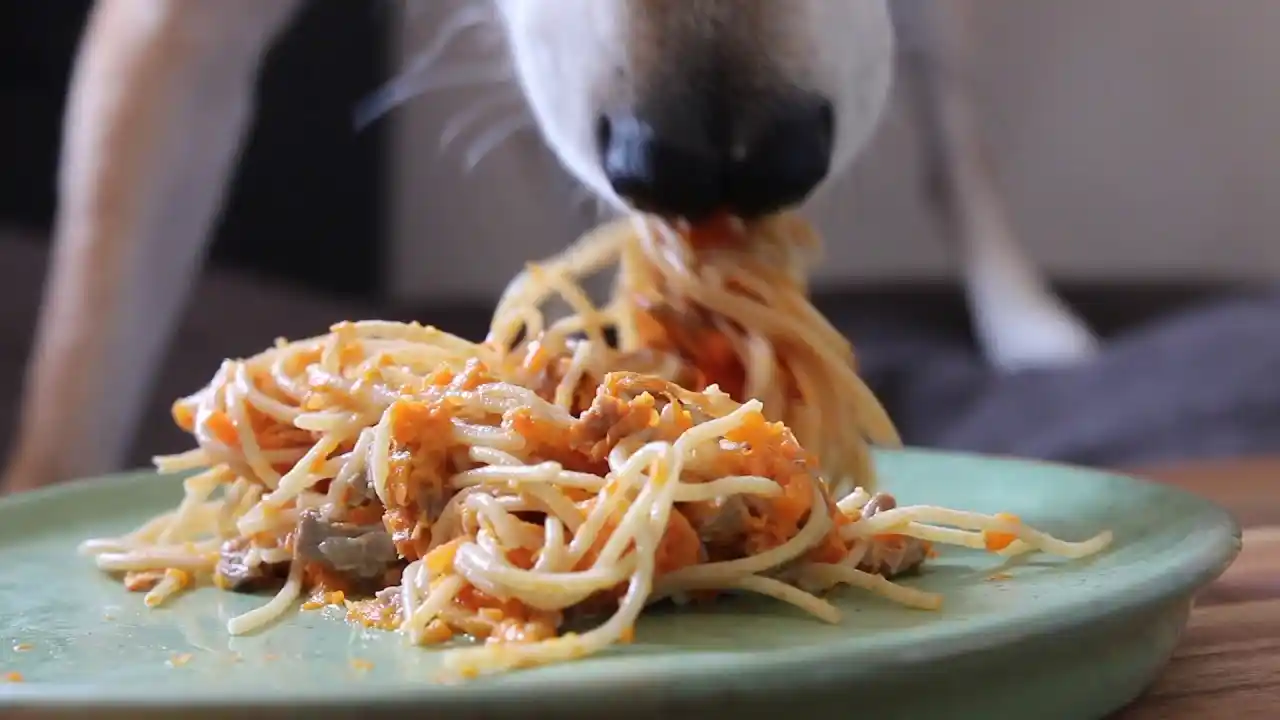
Here is the direct answer: plain, cooked spaghetti without any sauce, salt, or seasoning is not toxic to dogs. It is simply wheat flour, water, and sometimes eggs. Your dog will not be poisoned by plain pasta alone.
But here is what that means nutritionally. A single cup of plain spaghetti contains roughly 200 calories and 40 grams of carbohydrates. According to the Association of American Feed Control Officials (AAFCO), adult dogs need a diet where treats make up no more than 10 percent of daily calories. For a 20-pound dog, that means plain spaghetti uses up most of their treat budget with no vitamins, minerals, or protein to show for it.
In my experience working with dog owners, the most common mistake is assuming that because spaghetti is “just wheat,” it is harmless in unlimited amounts. That is simply not true.
The real danger comes from three things: what you put on the spaghetti, how much you feed, and your dog’s individual health status. Each of these is covered below.
Not all noodles are created equal, and the ingredient label matters more than the shape.
| Noodle Type | Safe For Dogs? | Key Concern |
|---|---|---|
| Plain egg noodles | Yes, in small amounts | Simple ingredients, lowest risk |
| Whole wheat pasta | Yes, in small amounts | Higher fiber, may cause gas |
| Ramen noodles | No | Very high sodium levels |
| Gluten-free pasta | Depends on ingredients | Xanthan gum can cause upset |
| Spinach or vegetable pasta | Yes, in small amounts | Onion powder sometimes added |
| Rice noodles | Yes, in small amounts | Lower risk than wheat pasta |
The biggest physical danger is the shape. Long, uncut spaghetti strands can wrap around a dog’s esophagus or create a choking hazard, especially for small breeds. I always recommend breaking spaghetti into one-inch pieces before serving. This simple step eliminates the choking risk entirely.
Spaghetti becomes dangerous for dogs in four specific situations. Let me walk through each one.
Situation 1: High carbohydrate load
A high-carb diet contributes to weight gain and diabetes. The Association for Pet Obesity Prevention reports that 56 percent of dogs in the United States are overweight or obese. Feeding spaghetti regularly makes this problem worse.
Situation 2: Digestive upset
Dogs produce less amylase than humans, which is the enzyme needed to break down starches. A sudden serving of spaghetti can cause gas, bloating, diarrhea, or vomiting. This is especially common in dogs with sensitive stomachs.
Situation 3: Toxic ingredients in sauce
Most tomato sauces contain garlic and onion, both of which are toxic to dogs. Even small amounts can cause hemolytic anemia, a condition where red blood cells are destroyed faster than the body can replace them.
Situation 4: Chronic exposure
Even small amounts of garlic and onion become dangerous with repeated exposure. The toxins accumulate in the body over time. What seems harmless once a week can cause cumulative damage.

Spaghetti and meatballs is one of the most dangerous combinations for dogs.
Meatballs are typically made with seasoned ground beef or pork. They nearly always contain garlic, onion, salt, and black pepper. Garlic and onion are toxic to dogs even in small quantities. The fat content alone is problematic.
| Dog Size | Fat in One Meatball | Risk Level |
|---|---|---|
| Under 10 lbs | 10-15 grams | High — exceeds daily limit |
| 10-25 lbs | 10-15 grams | High — half daily limit |
| 25-50 lbs | 10-15 grams | Moderate |
| Over 50 lbs | 10-15 grams | Low |
A single meatball can contain 10 to 15 grams of fat. For a small dog, that is enough to trigger pancreatitis, an inflammation of the pancreas that causes severe abdominal pain, vomiting, and lethargy.
Breeds like Miniature Schnauzers, Yorkshire Terriers, and Cocker Spaniels face higher pancreatitis risk. If your dog has a history of pancreatitis, even one meatball requires a vet call.
Raw spaghetti is not toxic, but it is mechanically dangerous in three ways.
First, the hard, brittle texture can crack a dog’s teeth. Second, the sharp edges can scrape the esophagus or stomach lining. Third, once swallowed, raw pasta expands in the stomach as it absorbs moisture. This can cause gastric dilation or even obstruction.
I have seen cases where dogs required endoscopic removal of raw spaghetti that formed a plug in the stomach. This is not common, but it is serious when it happens.
If your dog ate a few pieces of raw spaghetti, they will likely pass them without issue. If your dog ate an entire box, contact your veterinarian. Watch for vomiting, inability to keep food down, abdominal pain, or straining to defecate.
This is where most problems start. Commercially prepared tomato sauce almost always contains garlic and onion. Even homemade sauces often start with garlic and onion as a base.
The toxic dose of garlic is approximately 15 to 30 grams per kilogram of body weight. A single garlic clove weighs about 3 to 7 grams. For a 10-pound dog, that means just half a clove could reach a toxic level.
Tomato sauce also contains high levels of salt and sugar. A single cup of marinara sauce contains 600 to 800 milligrams of sodium. For a 30-pound dog, that is nearly half their daily sodium limit.
| Toxin | Common Sources | Toxic Amount (per lb body weight) | Symptoms |
|---|---|---|---|
| Garlic | Tomato sauce, meatballs, seasoning | ~7 grams per 10 lbs | Weakness, pale gums, vomiting |
| Onion | Tomato sauce, pasta salad, seasoning | ~15 grams per 10 lbs | Lethargy, rapid breathing |
| Salt | Processed sauces, cheese | ~4 grams per 10 lbs | Excessive thirst, tremors |
The rule is simple: if the pasta has red sauce on it, do not feed it to your dog.
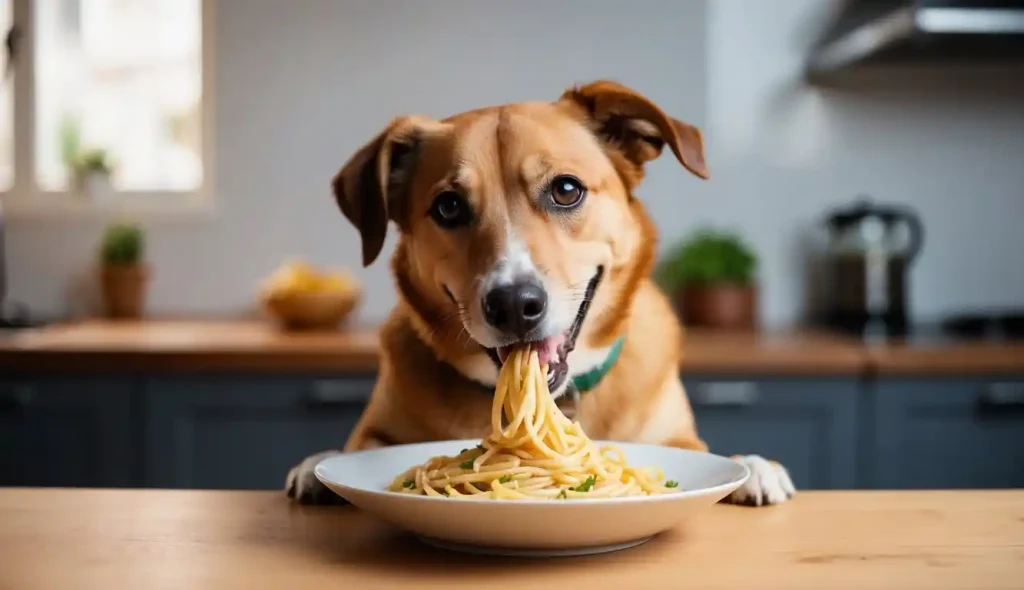
Meat sauce combines the risks of tomato sauce with the risks of seasoned meat. The additional fat increases pancreatitis risk. Many meat sauces also contain hidden spices like red pepper flakes, chili powder, or cayenne that cause significant gastrointestinal distress.
If your dog ate spaghetti with meat sauce, check the ingredient list for garlic, onion, and chili pepper. If any of these are present, contact your veterinarian.
Macaroni and cheese introduces three problems: dairy, fat, and artificial ingredients.
Most adult dogs are lactose intolerant. They lack sufficient lactase, the enzyme needed to break down dairy. Feeding macaroni and cheese can cause gas, bloating, diarrhea, and abdominal pain.
The cheese sauce in boxed macaroni and cheese is highly processed. It contains artificial flavorings, preservatives, and high sodium levels. Some powdered cheese mixes contain onion powder listed as “natural flavors” without prominent labeling.
| Ingredient | Risk Level | Why |
|---|---|---|
| Milk/cheese | Moderate | Lactose intolerance common |
| Butter | High | Fat content triggers pancreatitis |
| Powdered cheese mix | High | May contain onion powder |
| Breadcrumb topping | Low | Safe in tiny amounts |
| Artificial flavorings | Moderate | Unknown effects, avoid |
If your dog eats a few pieces of plain macaroni without cheese, it is usually fine. Full macaroni and cheese should not be shared.
Pasta salad is risky for three reasons beyond the pasta itself.
First, most pasta salads contain mayonnaise or oil-based dressings that are high in fat. Second, many include raw onions, which are directly toxic. Third, pasta salad sits at room temperature, allowing bacterial growth.
If your dog ate pasta salad, you cannot easily identify every ingredient. The rule applies again: if you are unsure what is in it, do not feed it.
Here is your emergency action guide based on what your dog ate.
| Scenario | Action Required | Call Vet? |
|---|---|---|
| Plain pasta, few strands | Monitor for gas or loose stool | No |
| Plain pasta, large amount | Withhold food 12 hours, provide water | Only if symptoms persist |
| Red sauce, no garlic/onion | Monitor for vomiting or diarrhea | Only if severe |
| Red sauce with garlic/onion | Call vet immediately | Yes — right now |
| Raw spaghetti, few pieces | Monitor for choking or blockage | Only if symptoms appear |
| Raw spaghetti, entire box | Call vet for guidance | Yes |
| Meatballs with sauce | Call vet, check for garlic/onion | Yes |
| Macaroni and cheese | Monitor for diarrhea, withhold dairy | Only if severe |
Garlic and onion toxicity symptoms take 24 to 48 hours to appear. Do not assume your dog is fine just because they seem okay right now.
Portion size must match your dog’s body weight. Use this chart as your reference.
| Dog Size | Weight Range | Maximum Plain Pasta | Frequency |
|---|---|---|---|
| Toy breeds | Under 10 lbs | 1-2 small noodles (1 tbsp) | Once per month |
| Small breeds | 10-25 lbs | 2-3 noodles (2 tbsp) | Once per month |
| Medium breeds | 25-50 lbs | 3-5 noodles (1/4 cup) | Once per month |
| Large breeds | 50-75 lbs | 5-8 noodles (1/3 cup) | Once per month |
| Giant breeds | Over 75 lbs | 8-10 noodles (1/2 cup) | Once per month |
Puppies need even smaller portions. A 10-pound puppy should get no more than one small noodle as a rare treat. Their developing digestive systems are more sensitive to new foods.
No, do not replace rice with pasta for bland diets.
White rice is more easily digestible than pasta. This is why veterinarians recommend plain white rice for bland diets when a dog has an upset stomach. Rice is lower in fiber and less likely to cause gas.
Pasta has a higher glycemic index than rice, meaning it raises blood sugar more quickly. For dogs with diabetes or insulin resistance, rice is the safer choice.
For a bland diet after digestive upset, stick to plain white rice and boiled chicken. Pasta does not offer the same digestive benefits.
Wheat allergy is possible in dogs, though less common than protein allergies. Symptoms include these six signs.
If you suspect a wheat allergy, stop feeding any wheat-based products for two to three weeks. Monitor for symptom improvement. Your veterinarian can perform food elimination trials or allergy testing to confirm.
| Safe Alternative | Benefits | How To Prepare |
|---|---|---|
| Plain sweet potato | Fiber, vitamin A, potassium | Boiled or baked, no seasoning |
| Plain white rice | Easy to digest | Cooked, no salt or oil |
| Plain pumpkin | Fiber, digestive health | Unsweetened, no spices |
| Plain green beans | Low calorie, high fiber | Steamed or raw |
| Plain oatmeal | Soluble fiber | Cooked with water, no sugar |
Your dog’s primary nutrition should come from high-quality commercial dog food. Treats are occasional additions, not dietary staples.
Spaghetti squash is different from wheat spaghetti and much safer for dogs.
It is a vegetable. It is low in calories, high in dietary fiber, and rich in vitamins A, C, and B6. A one-cup serving contains only 42 calories compared to 200 calories for wheat pasta. It also contains antioxidants like beta-carotene and lutein that support eye and immune health.
Prepare spaghetti squash without any seasoning, butter, oil, or salt. Roast it until tender, scrape out the flesh with a fork to create the stringy texture, and serve plain.
Most dogs enjoy the texture and taste. It is a healthy alternative when you want to share a noodle-like treat.
Yes, dogs can eat plain cooked spaghetti without getting sick if the portion matches their size and the pasta has no sauce or seasoning. The risk of getting sick increases with portion size and added ingredients. Plain pasta in tiny amounts rarely causes problems.
Any amount exceeding the portion guidelines table above is too much. For a small dog under 10 pounds, more than two noodles is excessive. For a large dog over 75 pounds, more than half a cup is excessive. Signs of too much spaghetti include vomiting, diarrhea, bloating, and gas.