
Is your Maltese puppy sporting a “double row” of teeth, or are you wondering if your adult dog is missing a molar? For toy breeds, the gap between a standard dental formula and a tiny jaw creates a unique set of oral health challenges that can lead to lifelong pain if ignored. This guide provides the exact tooth counts, developmental timelines, and professional care strategies you need to ensure your Maltese keeps a healthy, pain-free smile.
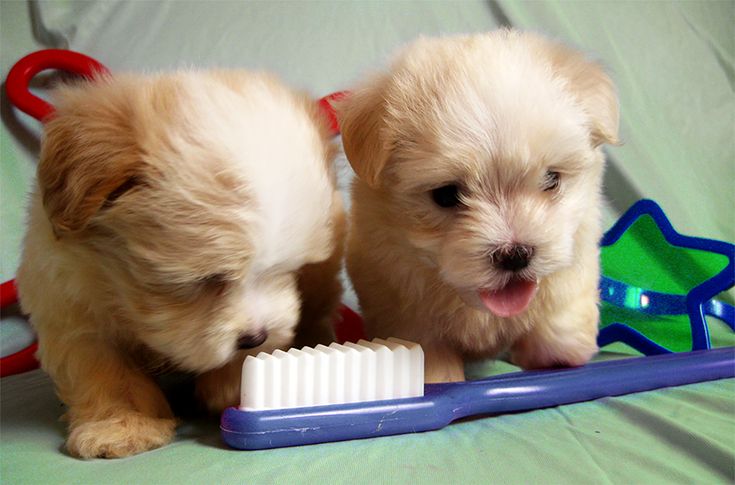
Adult Maltese dogs have exactly 42 permanent teeth. It is a common misconception that smaller dogs have fewer teeth than larger breeds. In reality, the canine dental formula is a biological constant across the species Canis familiaris. Whether you own a 5-pound Maltese or a 150-pound Mastiff, the blueprint for the adult mouth is identical.
For a new Maltese owner, the first dental assessment should happen around eight weeks of age. At this stage, your puppy is in the heart of its deciduous phase. A veterinarian will perform a “count and check,” ensuring that the 28 baby teeth are erupting normally and that the jaw is symmetrical.
However, while the count is consistent, the fit is not. This is where genetics play a pivotal role. The Maltese is bred for a compact, brachycephalic-leaning skull. This genetic predisposition often results in a jaw that is numerically “too small” for the 42 teeth it must eventually house. When 42 permanent teeth compete for a tiny amount of real estate, the result is overcrowding. This crowding doesn’t change the number of teeth, but it creates “plaque traps”—tight spaces where food and bacteria lodge, making the Maltese significantly more prone to early-onset decay than larger breeds.
If you were to look at a professional Maltese teeth diagram, you would see a highly specialized toolkit designed for an omnivorous diet. The 42 teeth are divided into four distinct types:
Proper bite alignment, or occlusion, is the goal of every dental assessment. In a healthy Maltese, the upper incisors should slightly overlap the lower incisors (a “scissor bite”). More importantly, the lower canines must fit precisely into the diastema—the natural gap between the upper third incisor and the upper canine.
When a dental diagram is compared to a real-life Maltese mouth, vets look for “malocclusions.” In toy breeds, the most common issue is a “crossbite” or “underbite,” where the lower jaw extends past the upper. These diagrams are essential because they allow a vet to spot a displaced tooth before it begins wearing down the opposite tooth or slicing into the dog’s own gum line or palate. If the occlusion is off, a tooth that is “correctly counted” can still be a medical liability.
To put it simply: a Maltese dog has the exact same number of teeth as a Golden Retriever or a German Shepherd—42 permanent teeth. The difference is not in the quantity, but in the density.
Imagine trying to fit 42 large pebbles into a small tea cup versus a large mixing bowl. The pebbles (the teeth) are the same size relative to the breed’s proportions, but in the “tea cup” (the Maltese jaw), they are pressed tightly against one another. This is the core of the small-breed dental struggle. In medium and large breeds, there is often more “interproximal space”—the gap between the teeth. This space allows saliva to wash away debris more effectively and makes it easier for owners to floss or brush.
Breeding has preserved the standard canine dental formula to ensure that the Maltese remains a functional predator/scavenger in terms of biology. However, this preservation has created an evolutionary mismatch. The skull shrunk over centuries of selective breeding for the “toy” aesthetic, but the dental formula stayed the same. Consequently, a Maltese is essentially a large-dog mouth compressed into a tiny face, which is why they require a level of dental maintenance that a larger breed simply doesn’t need to survive.

Across the board, dogs transition through two distinct sets of teeth: the deciduous (puppy) set and the permanent (adult) set. This biological transition is designed to ensure the puppy can eat solid food while its jaw is still growing.
The Deciduous Formula (Puppy): 28 Teeth
Puppies are born toothless. Their baby teeth begin to erupt around 3 to 4 weeks. This set consists of 12 incisors, 4 canines, and 12 premolars. Notably, puppies have no molars. Molars are the largest teeth and require a more developed jawbone to support their deep roots, which is why they only appear in the adult set.
The Permanent Formula (Adult): 42 Teeth
As the puppy matures, the 28 baby teeth are replaced by a more robust set. The adult formula adds the 10 molars and increases the number of premolars.
Table 1: Canine Dental Formula and Function
| Tooth Type | Puppy Count | Adult Count | Primary Function | High-Risk Area for Maltese |
|---|---|---|---|---|
| Incisors | 12 | 12 | Nibbling, Grooming | Lower front (Tartar buildup) |
| Canines | 4 | 4 | Tearing, Holding | Gumline (Plaque traps) |
| Premolars | 12 | 16 | Shearing, Slicing | Upper 4th premolar (Heavy tartar) |
| Molars | 0 | 10 | Crushing, Grinding | Very back (Hard to reach/brush) |
A common myth is that “teacup” dogs or “micro” Maltese have fewer teeth. This is false. Even the smallest Maltese is biologically programmed for 42 teeth. If a “teacup” dog has fewer, it is usually due to hypodontia (congenital missing teeth) or, more commonly, premature tooth loss due to severe periodontal disease.
The transition from 28 to 42 teeth is a natural, biological process. Between 3.5 and 6 months of age, the permanent teeth push upward, triggering a process called root resorption. The body essentially dissolves the root of the baby tooth, causing it to loosen and fall out. This is the only time a dog should “naturally” lose teeth.
Once a dog reaches adulthood, permanent teeth are not meant to fall out. If an adult Maltese loses a tooth, it is a medical emergency or a sign of chronic neglect. The most common cause is periodontal disease, which acts like a slow-motion demolition of the tooth’s foundation.
Plaque is a biofilm of bacteria that forms within hours of brushing. If not removed, it mineralizes into calculus (tartar) within 48 to 72 hours. In Maltese dogs, this tartar builds up rapidly on the upper premolars. The tartar pushes the gum line away from the tooth, creating a “periodontal pocket.” Bacteria then migrate deeper, eating away at the periodontal ligament and the alveolar bone. Eventually, the tooth loses its anchor and falls out—often accompanied by a systemic infection that can travel to the heart or kidneys.
Warning Signs of Abnormal Tooth Loss:
Because the Maltese has 42 teeth crowded into a tiny space, “cleaning” is not just about the surface; it is about the gaps. Plaque and tartar accumulate most aggressively on the maxillary (upper) fourth premolars. If you lift your Maltese’s lip, you will likely see a thick, brown-to-orange crust on those upper back teeth. This happens because the cheek pouches press the plaque against the teeth, and the salivary glands in the upper jaw provide a mineral-rich environment that accelerates tartar formation.
Daily preventive care is the only way to stop this. Brushing doesn’t just “clean” the tooth; it disrupts the biofilm. If you only brush once a week, the tartar that formed on Monday has already mineralized by Wednesday, and your brush will simply glide over the top of it without removing it.
Table 2: Safe vs. Dangerous Chew Materials for Maltese Teeth
| Material | Safety Level | Effect on Teeth | Recommendation |
|---|---|---|---|
| Soft Rubber (KONG) | ✅ Safe | Massages gums, removes surface plaque | Best for daily use |
| Dental Chews (VOHC Approved) | ✅ Safe | Chemically and mechanically reduces tartar | Great supplement |
| Rawhide (Processed) | ⚠️ Caution | Choking risk; some are too hard for toy jaws | Use only under supervision |
| Deer Antlers/Hooves | ❌ Dangerous | High risk of Slab Fractures (tooth cracking) | Avoid Entirely |
| Ice Cubes/Rocks | ❌ Dangerous | Causes micro-fractures in enamel | Avoid Entirely |
| Nylon Bones (Hard) | ⚠️ Caution | Can wear down enamel if the dog is an aggressive chewer | Use “Soft” versions only |
Chewing habits are a double-edged sword. While “mechanical abrasion” (chewing) helps scrape plaque off, many Maltese owners make the mistake of giving their dogs “hard” chews to “clean their teeth.” In a toy breed, the force exerted on a hard antler can easily exceed the strength of the tooth enamel, leading to a vertical fracture that requires a full extraction and an expensive vet bill.
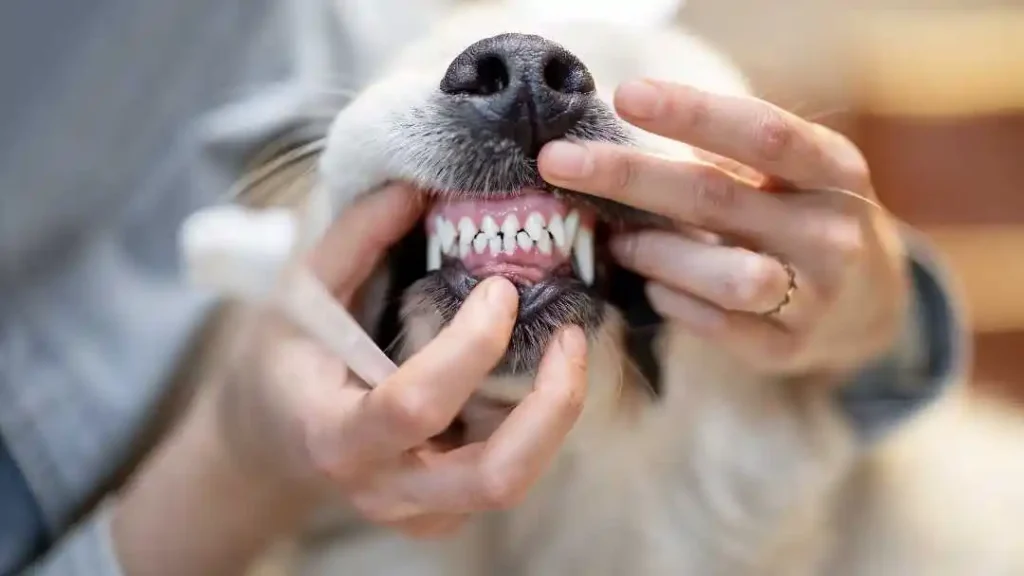
Maltese puppies begin their dental journey with 28 deciduous teeth. These teeth are smaller, sharper, and have shallower roots than adult teeth. They erupt in a predictable window, though individual puppies may vary by a week or two.
The Maltese Dental Milestone Timeline
| Age | Dental Milestone | What the Owner Sees | Action Required |
|---|---|---|---|
| 3–4 Weeks | First Eruption | Tiny, needle-sharp incisors appear | Start introducing soft puppy food |
| 6–8 Weeks | Full Deciduous Set | All 28 baby teeth are present | First vet dental check; count teeth |
| 3.5–4 Months | The “Switch” Begins | Baby incisors begin to loosen; adult teeth emerge | Provide safe teething toys (frozen cloths) |
| 4–5 Months | The Canine Transition | Baby “fangs” fall out; adult canines erupt | Monitor for “Double Teeth” (Retained) |
| 5–6 Months | Premolar Replacement | Back teeth are replaced by larger adult versions | Weekly “Lip-Lift” inspections |
| 6–7 Months | Finalization | All 42 permanent teeth should be in place | Final Deadline for Baby Tooth Loss |
Teething behaviors in Maltese puppies can be intense. Because their mouths are so small, the pressure of a permanent tooth pushing through the gum is more concentrated. This leads to excessive drooling, “mouthiness” (biting everything), and occasional spotting of blood on toys.
Enamel development is critical during this phase. If a puppy’s diet is deficient in calcium or phosphorus, or if the mother suffered from nutritional stress, the enamel may be “hypoplastic” (thin or pitted). This makes the adult teeth more susceptible to decay and sensitivity for the rest of the dog’s life.
Puppies have four baby canine teeth—two on top, two on the bottom. These are the “fangs” that cause the most trouble for your furniture and your ankles. In a healthy puppy, these baby canines serve as “placeholders,” maintaining the space in the jaw and guiding the adult canine into the correct position.
Normal positioning involves the baby canine pointing slightly outward. However, in Maltese puppies, we often see abnormal fang positioning. This happens when the baby canine is angled too far inward, causing it to strike the roof of the mouth (the hard palate). This creates a painful ulcer and, more importantly, blocks the adult tooth from erupting.
If a baby canine is misaligned, it acts like a roadblock. The adult tooth, which is much stronger, will try to push around the roadblock, often erupting in a “ectopic” position (the wrong place). This can result in a tooth that grows into the gum or pushes the other teeth out of alignment, leading to a lifelong struggle with plaque and gum disease.
The process of losing baby teeth is a biological miracle called odontoclasia. As the adult tooth grows in the jaw, it releases enzymes that dissolve the root of the baby tooth above it. Once the root is gone, the baby tooth has nothing holding it in and falls out—often while the puppy is eating or sleeping.
In a perfect world, the baby tooth falls out just as the adult tooth emerges. In the Maltese world, this rarely happens. Instead, owners encounter the “Shark Tooth” Phenomenon. This is when the adult tooth erupts behind or beside the baby tooth, leaving two rows of teeth in the mouth.
Table 3: Normal Teething vs. Concerning Dental Signs
| Feature | Normal Teething | Concerning / Abnormal | Action |
|---|---|---|---|
| Tooth Presence | Baby tooth is loose/wobbly | Baby tooth is rock solid; adult is beside it | Monitor for 2 weeks →→ Vet |
| Gum Color | Pale pink to slightly red | Deep purple, bright red, or bleeding | Call Vet Immediately |
| Breath | Mild “puppy breath” | Strong, foul odor (indicates infection) | Call Vet Immediately |
| Behavior | Chewing toys, occasional whimpering | Refusing food, pawing at mouth, lethargy | Call Vet Immediately |
| Timeline | Most baby teeth gone by 6 months | Baby teeth present at 7+ months | Schedule Extraction |
To monitor this, I recommend the “Weekly Lip-Lift.” Gently lift the upper lip of your puppy and run your finger along the gum line. You are feeling for “double teeth.” If you feel two hard bumps where there should be one, you have a retained deciduous tooth.
As established, the count is identical (42), but the spatial dynamics are vastly different. This is known as the “Toy Breed Paradox.” In a large breed, the eruption schedule is often faster and more “clean.” The jaw grows rapidly, providing ample room for the adult teeth to slide into place.
In the Maltese, the jaw growth slows down significantly earlier. This means the eruption schedule can feel “sluggish.” An adult tooth may start to emerge at 4 months, but because the jaw isn’t expanding fast enough, the tooth gets “stuck.”
When evaluating tooth size relative to jaw size, a vet looks for crowding. In a Maltese, you will often see the premolars overlapping like shingles on a roof. While this doesn’t change the count of 42, it creates “blind spots” for toothbrushing. You cannot physically fit a toothbrush bristle between two overlapping teeth, which is why Maltese dogs often have “perfect” front teeth but “rotten” back teeth.
Retained deciduous teeth (persistent baby teeth) occur in an estimated 60% of toy breeds. The primary reason is failed root resorption.
For a baby tooth to fall out, the adult tooth must be positioned directly beneath it to “eat away” the root. In a tiny Maltese jaw, the adult tooth often erupts at a slight angle because there is no room. Because the adult tooth is not hitting the baby tooth’s root directly, the root remains intact. The baby tooth stays “locked” in the jaw, and the adult tooth is forced to erupt in the only space available—usually behind the baby tooth.
The Danger of the “Wait and See” Approach:
Many owners believe that “they’ll just fall out eventually.” This is a dangerous myth. Once a puppy hits 7 months, the biological window for natural resorption closes. A baby tooth that is still there at 7 months is likely to stay there for life.
If left untreated, retained teeth cause:
Here is the thing: a retained baby tooth is not just a cosmetic issue; it is a “plaque factory” that can lead to tooth loss in the adult teeth by the time the dog is five years old.
Managing retained teeth starts with a commitment to non-invasive monitoring. The goal is to encourage the baby tooth to loosen naturally without causing trauma to the jaw.
The Safe Home Inspection Method (Step-by-Step):
Encouraging Natural Loss:
While you cannot “force” a tooth out, you can provide a stimulating environment that encourages it. Use frozen washcloths (soak a clean cloth in water or low-sodium chicken broth and freeze it). The cold numbs the inflamed gums, and the rough texture of the fabric provides the necessary friction to help a loose baby tooth finally snap off.

Veterinary intervention is not a “failure” of the owner; it is a standard part of toy breed healthcare. You should schedule a professional dental consultation the moment your puppy hits 6.5 to 7 months if any baby teeth remain.
Use Case: The “7-Month Retained Canine”
Modern Veterinary Dental Procedures:
Many owners fear anesthesia, but for a Maltese, it is the only safe way to perform dental work. Modern clinics use Isoflurane or Sevoflurane gas, which allows for a rapid “wake up” and precise control of depth.
The procedure typically involves:
Post-Treatment Care Checklist:
Answer the following questions to determine your next step.
Question 1: Is your Maltese puppy currently under 6 months old?
Question 2: Do you see “double teeth” (an adult tooth next to a baby tooth)?
Question 3: How old is the puppy exactly, and are baby teeth still present?
Question 4 (Symptom Check): Regardless of age, are you seeing any of the following: Bright red gums, foul breath, or refusal to eat?
Once the 42 permanent teeth are in place, the battle against tartar begins. For a Maltese, brushing is not “optional”—it is a medical necessity.
An effective routine involves mechanical disruption (brushing) and chemical disruption (enzymes). The gold standard is brushing once a day, ideally in the evening. This removes the food particles and plaque that accumulated throughout the day, preventing them from mineralizing into tartar overnight.
Table 4: Dental Tool Effectiveness Comparison
| Tool | Effectiveness | Pros | Cons | Best For… |
|---|---|---|---|---|
| Soft-Bristle Toothbrush | ⭐⭐⭐⭐⭐ | Deepest cleaning; reaches the gumline | Some dogs hate the feel | Daily deep clean |
| Finger Brush (Silicone) | ⭐⭐⭐ | Great for introducing brushing | Doesn’t reach the very back molars | Beginners / Anxious dogs |
| Dental Wipes | ⭐⭐ | Fast, convenient, no toothpaste needed | Misses the gaps between teeth | “Emergency” cleaning/Travel |
| Water Additives (Rinses) | ⭐ | Zero effort; helps freshen breath | Does NOT remove existing tartar | Supplemental care only |
| VOHC-Approved Chews | ⭐⭐⭐⭐ | Mechanical scraping + enzymes | Can be high in calories | Between brushing sessions |
Professional dental cleanings should occur every 12 to 18 months. These are not “cosmetic” cleanings; they are surgical procedures. A vet uses an ultrasonic scaler to remove tartar from below the gumline (subgingival scaling). This is the only way to treat early-stage periodontal disease. If you only clean the visible part of the tooth, you are ignoring the area where the actual bone loss occurs.
[Selling Point: To simplify your routine, we recommend our Premium Maltese Dental Care Bundle. It includes a tiny-head angled brush, a 6-month supply of enzyme toothpaste, and a free 12-month telehealth subscription for monthly dental check-ins with a vet technician.

When shopping for a Maltese, “standard” dog toothbrushes are often too large. Trying to jam a large brush into a Maltese mouth can trigger a gag reflex and make the dog associate brushing with fear.
The Ideal Brush:
Look for a “Tiny Head” or “Angled” brush. The head should be no wider than the Maltese’s molar. Soft or ultra-soft bristles are mandatory. Medium or hard bristles can actually scrub away the delicate gum tissue of a toy breed, leading to “toothbrush-induced” gum recession.
The Ideal Toothpaste:
You must use a dedicated Enzyme Dog Toothpaste. These pastes contain enzymes like glucose oxidase and lysozyme. These enzymes work by breaking down the polysaccharide matrix of the plaque biofilm, essentially “digesting” the bacteria even in areas where the brush doesn’t perfectly reach.
⚠️ CRITICAL SAFETY WARNING: THE XYLITOL DANGER ⚠️
NEVER use human toothpaste on a dog.
Proper Brushing Technique for Small Breeds:
Adult Maltese dogs have exactly 42 permanent teeth, and Maltese puppies have 28 deciduous baby teeth. This count is a biological standard for all dogs, regardless of size. However, the Maltese is prone to “retained” baby teeth because their small jaw often lacks the space for adult teeth to push the baby teeth out naturally.
The most effective routine is daily brushing with a soft-bristled, tiny-head toothbrush and an enzyme-based dog toothpaste. This physically disrupts plaque before it can mineralize into tartar. To complement this, provide VOHC-approved dental chews and schedule a professional veterinary scaling and polishing every 12 to 18 months to remove subgingival tartar.